Monday, October 31, 2005


SC adjourns hearing until Sunday

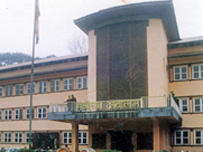
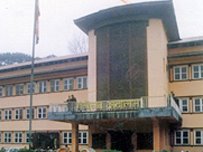
Kathmandu, Oct 31-The Supreme Court on Monday adjourned the hearing on a number of cases against the recently promulgated media ordinance that has imposed fresh curbs on the independent media.

A three-member bench comprising Chief Justice Dilip Kumar Poudel, Kedar Giri and Sarada Prasad Pandit decided to postpone the hearing until Sunday considering the Tihar holidays.

In today’s hearing, former Bar Association President Hari Har Dahal, former Attorney General Badri Bahadur Karki and advocates Tika Ram Bhattarai, Yagya Murti Banjade and Gopal Siwakoti Chintan pleaded on behalf of the petitioners. They presented arguments in favour of three separate writ petitions demanding an interim order halting the implementation of the ‘unconstitutional’ media ordinance.

During the hearing, lawyers said the government’s new ordinance contradicts the 1990 Constitution.
Pleading on behalf of the petitioners, lawyers accused the government of curbing the fundamental rights of the people guaranteed by the Constitution.

Three separate petitions filed were tabled on the bench today and yesterday. A Public Interest Litigation (PIL) case was filed against the media ordinance on October 21 by advocates Rabi raj Bhandari and Kahar Singh Khadka while nine professional organisations had brought a case on October 23. Similarly, a writ petition was registered at the apex court by the management of Kantipur FM, a private sector FM radio station, against the government after the latter raided the FM station on October 21 and took away equipment.

The lawyers also pleaded for the annulment of the controversial ordinance and the return of Kantipur FM's equipment seized during the mid-night raid.

The new press law and the government action have drawn condemnation from almost all quarters in the country as well as the international community.

The court is yet to start recording statement from the defendants’ side.

70 Houses in Sarlahi Looted

Sarlahi, Oct 31-A group of armed dacoits last night looted cash and other valuables worth Rs 1.4 million from 70 houses at Shiva Nagar Basti of Padariya VDC in Sarlahi district. Four locals were injured when the dacoits hit them with batons during the looting spree.

The dacoits blocked all roads to Shiva Nagar Basti, which is 9 km north of the district headquarters Mangalawa, between 11 pm to 3 am, said Satya Narayan Rai, outgoing vice-chairman of the VDC.
Shivaji Baitha, Bhagya Narayan Bharati and Sanjeev Kumar Yadav of Ward No 6 and Shankar Shah Teli of Ward No 9 were injured when the dacoits beat them up with bamboo batons for refusing to give them the keys of cupboards.

Health assistant at the District Health Office, Saroj Kumar Yadav, who reached the place to celebrate Tihar and Chhath Parva, said, “The dacoits took away all the money I had saved from my salary.”
He said the dacoits were masked.

Local youth Rakesh Kumar Bharati said the dacoits had carried axe, khukuri, hammer and other weapons.
SP at the District Police Office, Manohar Rimal, said the locals did not inform the police about the incident on time though telephone service is available in the village.

85 persons to be penalised over NBL loan irregularities news update

Former Nepal Bank MD, seven other ex-officials, businessmen sentenced

The Special Court today convicted 85 persons, including some former high-ranking officials of the Nepal Bank Limited, in four separate cases filed by the Commission for the Investigation of Abuse of Authority (CIAA) five years ago.
A three-member panel of Special Court Judges Govinda Prasad Parajuli, Rana Bahadur Bam and Bhoopdhoj Adhikary convicted former managing director of Nepal Bank Limited, Sher Bahadur Thapa, along with other former bank officials and businessmen of misappropriating millions in four bank dealings. The CIAA had sought the court’s order in recovering Rs 530 million from the 142 accused.

Thapa, one of the main accused, was handed down a sentence of eight years in jail in four separate cases. He was given two-year terms in each of the cases and was asked to pay a total fine of Rs 20,000. The bench also directed him to repay all the embezzled amount if the other convicted officials failed to repay their share.

The court also convicted businessmen from the Acharya, Shahani, Gadtaula and Malla groups in the scam. Some businessmen of the Acharya group were convicted for amassing Rs 210 million, Shahani group for Rs 190 million, Gadtaula group for Rs 96 million and Malla group for Rs 20 million.
The CIAA had filed a corruption case against the persons charging them of misappropriating a whopping Rs 530 millions in four scams. The court handed down two and three-year jail terms on former bank officials Purusottam Prasad Shrestha and Uttam Kumar Nepal respectively, one-year-terms on Mahanta Bahadur Maharjan, Shahi Kiran Shrestha and Ambar Kumar Khadka, 2-year-term on Rajani Lochan Prasad Tandukar and six-months term on Krishna Prasad Karanjit. Thirty-six other former officials were fined.

Convicted businessmen Rosan Man Joshi, Pradeep Neupane, Bishworam Shrestha, Narendra Mehar Shrestha, Purnaman Sharma Dawadi, Lok Bahadur Shrestha, Isworman Shrestha, Bijaya Prasad Lohani, Keshav Prasad Bhattarai, Mahanta Bahadur Maharjan and Ishworman Joshi were directed by the court to pay back the amount they had amassed.

The court also ordered businessmen Prakash Manandhar, Tirtha Narayan Maharjan, Narendraraj Bhattarai, Keshav Lal Shrestha, Madan Prasad Dhungel, Indira Gurung, and Mohan Shahani, to repay the amount they had taken. The bench further imposed a fine of Rs 5,000 on each on them.Other businessmen convicted in the cases are Mahendra Gadtaula, Purusottam Prasad Shrestha, Binod Shrestha, Durga Dutta Pandey, Shanti Shrestha, Prakash Rana Balananda Chaudhari and Pradip Man Tuladhar. However, some accused, including Dr prafulla Man Karmacharya, Mukunda Prasad Aryal, Prof Dr Bishwambher Pyakuryal, Dharendra Sumsher Rana, Gopi Lal Shrestha, Bhawani Devi Sharma and Diwakar Kumar Adhikary, were given a clean chit.

Special Court Convicts 200 in Bank Loan Scam

Kathmandu, Oct 30-The Special Court today convicted about 200 people including some former high-ranking officials of the Nepal Bank Limited in four separate corruption cases.

A three-member panel of the Special Court judges including Govinda Prasad Parajuli, Rana Bahadur Bam and Bhoopdhoj Adhikary passed the verdict convicting former managing director of the bank, Sher Bahadur Thapa, and others on charges of irregularities while releasing loan from the bank. Thapa is one of the man accused of the cases and he has been slapped eight years jail term in four separate cases. On each case he would face jail for two years along with Rs 20,000 fine.

The Commission for the Investigation of Abuse of Authority (CIAA) had filed the corruption cases against them five years ago, seeking forfeit of Rs 530 million from the accused. The bench ordered the accused to recover the amassed amount. Some of them have been jailed for a year. Thapa, who was the main investor, is convicted along with separate business groups for releasing loan to business parties illegally. The bank incurred a heavy loss due to his inappropriate decision.

Krishna Bahadur Karanjit, Rosan Man Joshi, Pradeep Neupane, Bishworam Shrestha, Narendra Mehar Shrstha, Purnaman Sharma Dawadi, Lok Bahadur Shrestha, Isworman Shrestha, Mohan Shahani, Mahendra Gadtaula, Purusottam Prasad Shrestha and Prakash Manandar Binod have been convicted among others.

Sunday, October 30, 2005


Hearing on Media Ordinance Case to Continue Tomorrow

Kathmandu, Oct 30- full bench comprising Chief Justice Dilip Kumar Paudel and justices Kedar Prasad Giri and Sarada Prasad Pandit today started hearing on separate writ petitions filed against the recently promulgated media ordinance.

Pleading on behalf of the petitioners, constitutional expert Purna Man Shakya, lawyers Chandra Gyawali, Kumar Regmi, Madhav Kumar Basnet, Dhurba Lal Shrestha, Kahar Singh Khadka, Madhav Kumar Basnet and Ravi Raj Bhandari presented their arguments before the bench in today’s hearing. The hearing will continue tomorrow.

They claimed that the ordinance was promulgated in an arbitrary manner and that it contradicts with the spirit of the 1990 Constitution. The also demanded the apex court to continue the stay order it issued on Thursday in the Kantipur FM case.

Government lawyers, including Attorney General Pawan Kumar Ojha, will present their arguments tomorrow.

Advocates Ravi Raj Bhandari and Kahar Singh Khadka, Kaptipur Publications and six professional organizations had filed three separate petitions at the Supreme Court in different dates seeking apex court order to nullify the ordinance.

Saturday, October 29, 2005

Government action against Kantipur FM illegal: NHRC

Kathmandu, Oct. 29-The National Human Rights Commission has said that the government's action against Kantipur FM was unconstitutional and illegal and urged the government to return the equipments seized from the Kantipur FM on October 21.

The NHRC report, after days of investigation, states the government has violated Articles 14, 17 and 22 of the Constitution and Articles 9, 14 and 19 of the International Covenant on Civil and Political Right though the government is a signatory to the accord.

A statement issued by the NHRC on Friday said that the NHRC said it had drawn the conclusion following conflicting claims by both parties — the government and the Kantipur FM officials.

The NHRC stated it had found that Kantipur FM had been airing news after acquiring a license from the government and even the recently promulgated Media Ordinance also permits airing of news if the government has already granted the license. "It has been found that Kantipur FM was not given appropriate time to clarify its position, " the statement said

The national rights body also urged the government to respect the fundamental rights guaranteed by the Constitution and to protect the life, property and freedom of speech and expression of journalists.

“The government did not follow provisions required by Sections 116 and 172 of the Court Management Chapter of the Civil Code while conducting the raid on the FM station at night,” the NHRC said.

The government authorities took away key equipment used to uplink the FM’s transmission to Bhedetar station in the eastern region on October 21, saying it was airing program defying recently promulgated ordinance, which prohibits to air program from different locations at the same time

CIAA files case over irrigation project forgery

Kathmandu, Oct. 29-The Commission for Investigation of the Abuse of Authority (CIAA) has filed cases at the Special Court against five persons of the mid-western region Irrigation Development Office for misappropriating around Rs. 300,000 by making forged papers.

In the case, the CIAA has claimed that they had made forged bills on the repair and maintenance of the Bhandakharka Irrigation Project at Jhula VDC of Rukum district.

Those alleged are: chief at the No. 1 sub-division office at Rukum, Binay Kumar Gami, overseer Bindeshwore Shah, accountant Sanu Narayan Adhikary, fieldman Kul Bahadur Bhandari and chairman of the consumers’ committee at Jhula Tanka Bahadur Shahi.

Four of them have been presented at the court along with the case and Tanka Bahadur Shahi is absconding.

The Commission has charged overseer Shah of making estimates without going to the field based on the report fieldman Bhandari, who, too, had not reached the site.

They had misappropriated Rs. 289,664 by presenting reports based on forged bills.

Friday, October 28, 2005

Full text of the Ordinance Amending some of the Nepal Acts Related to Media, 2005

Preamble:

Whereas it is expedient to amend some of the Nepal Act related to media; and

As there is no session of parliament at present;

Be this ordinance enacted by His Majesty the King Gyanendra Bir Bikram Shah Dev in accordance with Article 72 of the Constitution of the Kingdom of Nepal, 1990.

1. Short Title and Commencement

1. (1) This ordinance is named ‘Ordinance amending some of the Nepal Act related to Media, 2005’.

2. (2) This ordinance shall come into force immediately.

2. Amendment in Radio Act 2014:

Proviso of Section 3 of Radio Act 2014 has been replaced with following proviso,

‘but any person obtaining license for operating telecommunication services in accordance with Telecommunication Act 2053 or any customer utilizing telecommunication services through that licensed person; or any person or organized institution with permission or license in accordance with National Broadcasting Act 2049 for broadcasting any program through satellite, cable or any other means; establishing frequency modulation broadcasting system for broadcasting educational, entertainment and informative programs; establishing satellite station for program broadcasting, or customers utilizing broadcast services through licensed person or institution is not required to obtain license in accordance with this Act for installing, using or making telecommunication or radio broadcasting equipments.’

3. Amendment in National News Agency Act, 2019:

National News Agency Act has been amended as follows:

1. Subsection ‘5(a)’ has been added after Subsection 5 of Section 30 as follows.

‘5(a)’: Anyone collecting or disseminating news violating Section 32 shall be fined up to Rs. 500,000.00

2. Subsection 2 of Section 32 has been replaced with following:

(2) News agencies pursuant to Subsection (1) can disseminate their news throughout kingdom of Nepal obtaining permission from His Majesty’s Government.

Provided that, there is no need to obtain permission from His Majesty’s Government for disseminating news to Agency.

4. Amendment in Press and Publication Act 2048

Press and Publication Act 2048 has been amended as follows:

1. (1) In Section 14

(a) The words "His Majesty’s" in clause ‘a’ has been replaced with "His Majesty’s and members of royal family"

(b) following ‘c(i)’ has been added after Clause (c)

‘c(i)’: ‘discouraging acts that are deemed criminal as per existing laws’

1. (2) In Subsection (1) of Section 16

(a) words "anything prohibited for publication pursuant to Section 14 and 15, news, information or any material, or" has been added

(b) Clause (d) has been replaced with following Clause (d)

‘(c)’: "Promoting or assisting Terrorist, terrorism and destructive activities"

(d) Clause (b) and (e) have been omitted.

(3) Words "fine up to Rs. 10,000.00" has been replaced with "fine up to Rs. 100,000.00" in Section 27

(4) Words "fine up to Rs. 5,000.00" from different places of Section 28 has been replaced with "fine up to 50,000.00"

(5) Words "fine up to Rs. 5,000.00" has been replaced with "fine up to 50,000.00" in Section 29

(6) Words "fine up to Rs. 5,000.00" has been replaced with "fine up to 50,000.00" in Section 30

5. Amendment in Press Council Act, 2048

In Clause (d) of Subsection (2) of Section (12) of Press council Act 2048, "or his Press Representative Certificate or Temporary Press Representative Certificate shall be cancelled" have been added after "complete prohibition".

6. Amendment in National Broadcasting Act 2049

Following amendments have been made in National Broadcasting Act 2049:

(1) "or Television" have been omitted from Clause (c) of Section (2)

(2) "news-based programs" have been replaced with "informative programs" in Section (5) and following explanation have been added.

Explanation: For this Section "informative programs" denotes any programs on health, education, population, environment, weather, road transportation or related with any development activities with an objective of promoting information and public awareness.

(3) Section 6(a) has been added after Section (6).

'6(a)': (1) Notwithstanding anything written in this Act or elsewhere in existing laws any person or organization will not be provided license or certificate of radio,

television and publication either at once or time by time.

(2) Notwithstanding anything written in this Act or elsewhere in existing laws, if any person or organisation has obtained license or certificate of radio, television and publication prior to commencement of this Section, such person or organisation has to opt for any two among radio, television and publication within a year from the commencement of this Section and the remaining third should be managed to broadcast or publish by separate person, institution or management.

(3) His Majesty's Government shall revoke the license of radio or television broadcasting if any person or organization with license or certificate for radio, television or publication does not opt for any two or do not make arrangement of separate person, organization or management for broadcasting or publication within the duration pursuant to Subsection (2).

(4) The words "institutions or joint venture with domestic or foreign person or" contained in Section 9 (1) are omitted.

(5) Following Section 11(a) has been added after Section 11.

'11(a)': Not to broadcast programmes from another place without permission: Any broadcasting institution shall not broadcast its' program simultaneously from other than one place without obtaining permission from His Majesty's Government.

(6) Section 15 has been replaced with following Section 15.

(15) Shall not Broadcast: No one shall broadcast any materials containing following matters:

a. Subject matters with negative effects to political parties.

b. offensive matters.

c. any matters with the objectives to revolt against government by using violence.

d. any matters creating unreasonable horror and terror in public.

e. any matters, which misinterpret, dishonor, humiliate or dominate to any cast, ethnicity, religion or culture.

f. any matters, which discriminate, dishonor, humiliate or dominate any caste on the basis of area of habitat.

g. any matters against to nonaligned foreign policy of Nepal.

h. any matters or material prohibited for publication pursuant to existing laws.

(7) "fine up to Rs. 10,000.00 " has been replaced with "fine up to Rs. 100,000.00" in Subsection (2) of the Section 17.

7. Amendment in Defamation Act, 2016:

Of the Defamation Act, 2016-

(1) The words "if published" have been replaced with "If published or broadcast" in Section 3.

(2) Section 5 is replaced with following Section 5.

'(5)': Punishment for defamation or defamatory broadcasting or publication:

(1) Anyone defaming any other person shall be liable for fine up to Rs. 50,000.00 and imprisonment up to one year.

(2) Notwithstanding anything contained in Sub-Section (1) anyone broadcasting or publishing any defamatory matter through any electronic or other means of mass communication deliberately, or with reasonable cause to believe the occurrence of defamation shall be fined with

Rs. 100,000.00 to Rs. 500,000.00 or up to 2 year imprisonment or both."

(3) The words "printed or inscribed" contained in several places of Section 6 have been replaced with "published or broadcast" and the words "fine up to Rs. 100.00" have been replaced with the words "fine up to Rs. 50,000.00 ".

(4) The words "fine from Rs. 100.00 to Rs. 500.00" have been replaced with "fine up to Rs. 50,000.00".

(5) The words "fine from Rs. 100.00 to Rs. 500.00" have been replaced with "fine up to Rs. 50,000.00".

(6) The words "fine from Rs. 500.00 to 5,000.00" have been replaced with "fine up to Rs. 50,000.00" and "fine from Rs. 100.00 to Rs. 1,000.00" is replaced with "fine up to Rs. 100,000.00".

(Unofficial translation of the Ordinance published in the Nepal Gazette on October 9, 2005)
SC Issues Show Cause Notice to Home Minister

Kathmandu, Oct 28-The Supreme Court today ordered Home Minister Dan Bahadur Shahi to submit explanations why the government detained Rajendra Phuyal even after an SC order to free him a week ago.
A division bench of justices Khil Raj Regmi and Gauri Dhakal had issued the order following today's hearing in a case filed in the SC demanding Phuyal’s release.

The bench also ordered Shahi to submit his explanation by coming Monday. The bench ordered the government authorities including the headquarters of the Royal Nepalese Army and the Police Headquarters to produce Phuyal before the court on Monday in order to facilitate the court examine the case.

Court Extends Maoist Student Leader’s Custody

Kathmandu, Oct 28-The Patan Appellate Court today granted permission to the Kathmandu District Police Office (KDPO) to detain former vice-chairman of the Maoist-aligned student union, ANNISU-R, Krishna KC, in judicial custody for the next 12 days.

A divison bench of justices Krishna Prasasd Shrehstha and Hari Babu Bhattarai gave the permission following today's hearing. The KDPO had sought 25 days detention for KC in order to conduct investigation into the charges against him.

Pleading on behalf of KC, senior advocate Bishwo Kanta Mainali sought the court order to the authorities not to detain KC without any charge. He had also demanded the court finish the investigation and prosecution soon if there was any charges against him or release him as per the order of the Supreme Court a month ago.

SC puts off hearing on Deuba, Singh cases

Kathmandu , Oct. 28- The Supreme Court has postponed the hearing on two separate writ petitions of habeas corpus on former prime minister Sher Bahadur Deuba and former minister Prakash Man Singh, till the final decision of the special bench on the case related to legality of the Royal Commission for Control of Corruption (RCCC) is made public.

The special bench comprising chief justice Dilip Kumar Paudel and justices Sharada Shrestha and Tap Bahadur Magar today issued the order to produce the writs with a copy of the final decision of the special bench, as there is a subjudice case at the court related with RCCC.

Meanwhile, the court today fixed November 13 as the date of hearing on the case related to the legality of the RCCC. Advocates Sarbagya Raj Naya and Binod Karki had filed the writ petitions seeking immediate release of Deuba and Singh. Last month a division bench had referred the case to the special bench. Deuba and Singh are behind bars for the last seven months as per the RCCC’s order on corruption case while awarding contract of the Melamchi Drinking Water Project.

Thursday, October 27, 2005

SC Issues Stay Order on Kantipur FM Case

Kathmandu, Oct 27-The Supreme Court today ordered the government not to initiate any action against Kantipur FM regarding the cancellation of its licence for airing news.

A three-member bench comprising Chief Justice Dilip Kumar Paudel and justices Sarada Shrestha and Top Bahadur Magar ordered the government not to implement the letter of the Ministry of Information and Communications issued yesterday.

In the short-term interlocutory stay order, the bench told the government not to go ahead towards cancelling the licence of the Kantipur FM until October 30 when the hearing would be conducted on whether or not to issue a full-fledged stay order on Kantipur FM case and on the recently promulgated media ordinance case.

Early today, the Kantipur FM had filed a writ petition in the Supreme Court, challenging the government's move to revoke its licence.

Managing Director of the FM, Binod Raj Gyawali, today filed a writ petition seeking the apex court order to stay the government's warning to shut down his FM station. He sought the apex court stay order against the letter issued by the Ministry of Information and Communications yesterday giving 24-hour ultimatum to furnish explanation on why not to take action against it (Kantipur FM) for airing news. The memo threatened that if the explanation furnished was not satisfactory, the government could revoke its licence.
The apex court has scheduled the hearing for this afternoon.

On Monday, Chief Justice Dilip Kumar Paudel's single bench had declined to issue stay order on the government's action against it. He, however, had called the lawyers to move the SC if the government took action against any FM station. The SC had issued a show cause against the government authorities on why they had seized Kantipur’s equipment linking the regional broadcasting from Bhedetar of Dhankuta district.

The petition sought the apex court stay order against the letter issued by the Ministry yesterday giving 24-hour ultimatum to furnish explanation on why not to take action against it (Kantipur FM) for airing news. The memo threatened that if the explanation furnished was not satisfactory, the government could revoke its licence.


Another re-arrest
Pokhara, Oct 27 -Violating Appellate court order, plainclothes security personnel, on Wednesday, re-arrested Shughare Nepali , who was released from detention at the Court premises.
Lawyers and human rights defenders, who had gone there to receive Shughare Nepali to take safe place by moterbike, was stopped by police and took Shughare Nepali by taxi .Lawyers and human rights defenders were physically assaulted by the security men.
In the incident,some lawyers and human rights defender are injured
Responding to a habeas corpus writ petition filed , the Appellate court pokhara , justice Mohan parsad gimira and Hari parasd gimire had ruled that Shughare Nepali was detained "illegally" and that he be immediately released in the presence of the District Judge.
Court demands bail from senior bank official

Kathmandu, Oct 27-The Special Court has slapped a bail amount of Rs 25 million on a senior bank official with the state-run bank on corruption charges.
The court on Wednesday demanded a bail of Rs 25 million from Jalan Kumar Sharma, then acting manager at the Agricultural Development Bank, Nepal central office. The Commission for the Investigation of the Abuse of Authority (CIAA)—a constitutional body—had charge-sheeted Sharma on charge of corruption.
The court order came in response to a hearing whether to remand Sharma in judicial custody on corruption cases filed against nine persons including him by the CIAA on charges of issuing and taking loans illegally.
Sharma was sent into custody after he failed to post the bail amount demanded by the court.
The Commission had charge-sheeted them of embezzling Rs 100.1 million with a mal-intention between vehicle suppliers and the bank officials while issuing and taking loans last month. The other defendants on the case include deputy-managing director Ramchandra Maharjan, department chief Bharat Kumar Pokhrel and section officer Gopal Prasad Ghimire.
Similarly, vehicle suppliers of Kathmandu Tuk Tuk Pvt. Ltd., Jagarnath Prasad Sonar, Saroj Sharraf and Rabindra Sarraf, and Anita Sharraf and Koshila Sonarin of Anita Electrical and Mechanical Pvt. Ltd were also made the defendants.
SC Orders Govt Bodies to Produce Detainee

Kathmandu, Oct 27-Responding to a habeas corpus petition, the Supreme Court on Wednesday ordered the Home Ministry and some other government authorities to produce Rajendra Kumar Phuyal, a detainee, before the apex court on Friday.
Phuyal has been in detention for the last 18 months even after a SC division bench of Justices Min Bahadur Rayamajhi and Bala Ram KC ordered his release five days ago.A single bench of Justice Gauri Dhakal issued the order following a hearing today.
The bench directed the concerned authorities - Home Minister Dan Bahadur Shahi, the Ministry of Home Affairs, the Headquarters of Police and the Royal Nepalese Army, the Kathmandu District Police Office, Hanumandhoka and the Central Jail - to produce the detainee before the apex court by 10 am on Friday.The bench ordered the authorities to furnish written explanations on why Phuyal had still not been freed after the court ruling.
The SC has also asked the concerned government authorities as to why the apex court should not consider actions against them.Phyual’s father, Khagendra Prasad, had earlier filed a habeas corpus petition and a contempt of court case at the Supreme Court, seeking SC orders against the authorities for defying the apex court order to release his son.
The authorities had arrested Phuyal a security personnel employed by the private security company ‘Kantipur Security Service’ accusing him of being involved in terrorist and disruptive activities.
Same As Supreme Court on Wednesday said the hearing on the constitutionality of the controversial Royal Commission for Corruption Control would not take place tomorrow.
“The hearing will not be conducted tomorrow,” Supreme Court Acting Registrar Dr Ram Krishna Timalsena said today. According to him, Justice Ram Prasad Shrestha, one of the five special bench members put together to test the constitutionality of the RCCC, had gone to the Philippines on a week-long visit. Thus the case would not be heard tomorrow, Timalsena said.
The hearing was scheduled for Thursday nearly a month ago.

Govt to make IDs mandatory for crossing open border

Kathmandu, Oct 26 - The Nepal government is going to enforce ‘special identity cards’ for citizens of Nepal and India for crossing the some borders areas - from November 1st- as part of maintaining tight vigil along the open borders.

This was stated in a Home Ministry notice published in the government mouthpiece Gorakhapatra daily on Tuesday.

According to the notice, the new system is being applied to ensure systematic transportation from Jamunah-Rupedia checkpoint in Nepalgunj and Rupedia checkpoint of India, the notice said.

Gopendra Pandey, spokesperson of the Home Ministry, told that the new provisions are being brought into effect following the decision a meeting of the senior officials of the concerned authorities of Nepal and India nepalnews reports..

“The main objective of this system is to monitor the activities around the borders,” he said.

After the implementation of this system, citizens of both the countries will be required to obtain identity cards from the Department of Immigration to cross the borders. According to reports, an estimated 10,000 people travel through Nepalgunj checkpoint, mid-western Nepal, to India everyday.

The move comes amidst growing concerns about the movement of Maoist rebels in the bordering areas.

Govt issues 24-hour ultimatum to Kantipur FM

Kathmandu, Oct 26 - In what looks like a desperate final assault against Kantipur FM radio station, the government Wednesday gave a 24-hour ultimatum to the station to cancel its operating license.

In a "confidential" letter sent to the FM, the Ministry of Information and Communications has said "as the station has been found broadcasting news-oriented programmes despite the promulgation of the media ordinance, against Section 5 of the National Broadcasting Act 2049 BS, why the FM's operating license should not be canceled as per Section 8 (1) of the same Act?"

The government has said it has given the FM a "chance" to furnish written clarification within 24 hours mentioning reasons, if any, along with the necessary proof establishing the reasons, as to why the station's license should not be cancelled.

The Ministry has said that it will cancel the FM's license if it is not satisfied with the clarification or if no clarification is furnished within the 24-hour deadline.

Earlier on Monday, Chief Justice Dilip Kumar Poudel, had ordered the government to furnish its written replies over the promulgation of the controversial media ordinance and its mid-night raid on Kantipur FM.

Issuing a show cause notice to the government, in response to writ petitions filed by nine professional organizations and Kantipur FM against the recently promulgated media ordinance, the Chief Justice had assured lawyers and professionals present in the court chamber that the government would not take action against FM radios.

Wednesday, October 26, 2005

OHCHR is closely watching developments: Martin

Kathmandu, Oct 26 - Chief of the UN office of the High Commissioner for Human Rights (OHCHR), Ian Martin on Tuesday reassured a visiting delegation from Kantipur Publications and Kantipur FM that his office was closely watching the developments following the government attack on Kantipur FM last Friday night.

"We are already looking very closely at the situation and we will certainly have something more to say," Martin said.

The delegation led by Chairman Hemraj Gyawali handed over a letter to Martin apprising him of the raid on Kantipur FM and threats to the independent press in Nepal.

"I will speak to all the mission representatives in Geneva and take up the issue (raid on Kantipur FM) as well as the right to information of people among others," added Martin.

He also informed that he was in touch with the UN Special Rapporteur on Human Rights over the issue of press freedom in Nepal and threats it is facing. The delegation also urged the OHCHR to ensure that the right to information, freedom of expression and safety of all media personnel under threat, among others, are secured.

Same as,Over two dozen Nepali human rights groups have called upon general public to boycott elections for municipalities and House of Representatives announced by the government.


Addressing a press meet at Human Rights Home in Lalitpur on Wednesday, one of the coordinators of Defend Human Rights Movement, Nepal an alliance of over two dozen rights groups in the country Dr. Gopal Krishna Siwakoti, said proposed elections did not fulfill any criteria for free and fair elections set by the United Nations. He said the call for election was only a ploy to hoodwink the international community and prolong what he called the 'autocratic rule.'

Dr. Siwakoti alleged that the government was pursuing the policy of militarisation as seen in Burma, weakening the civil society as evident in Pakistan and spreading malice towards foreigners as being practiced in Zimbabwe. "There is no possibility of the (proposed) elections being representative in nature and there is no situation in the country where free will of the people could be expressed," he added.

A joint statement issued on behalf of the rights groups said election was a cornerstone of democracy and that only a democratic government could hold free and fair elections.

The Movement formerly known as a network of over two dozen rights groups-- also criticised the government's move to amend the Social Welfare Act and introduce new media law through ordinance. "By curtailing civil liberties and other freedom guaranteed by the constitution, how can you say that you are going to conduct free and fair elections in the country?" asked Sushil Pyakurel, former member of National Human Rights Commission.

The joint statement quoted statistics compiled by INSEC, a leading rights group, as saying that a total of 36 people were killed by the state over the last fifty days since the Maoists declared three-month-long unilateral ceasefire (on September 3, this year). During the same period, the rebels had killed six people.

The Movement called upon the CPN (Maoist) to prolong its ceasefire so that it could establish itself as a political force committed to multi-party polity. "Amid the noise of gun fire, voices of peace are suppressed. So, we urge the ceasefire to continue so that voices of peace could prevail," said Pyakurel.

The rights groups also urged the government to reciprocate the Maoists' move. "We call upon the state to immediately stop all type of offensive activities on its part and declare ceasefire," the statement said.

The Movement noted that the Maoists were found to be comparatively sensitive towards ceasefire declared by them. It said the state had raised the strength of the Royal Nepalese Army by 12,000 after the Maoists' announced unilateral ceasefire. Such an act is against the fundamental norms of the ceasefire, the statement said.

The rights groups alleged that the state was trying to curtail independence and freedom of the non-governmental organisations through the so-called code of conduct. They also termed the new ordinance related to media as "an assault on people's right to information" and condemned seizure of equipment from Kantipur F. M. Pvt. Ltd. by the government last Friday.

In their joint statement, the rights groups called upon the international community to monitor if Nepal was fulfilling its obligations under various UN treaties to which it is a party and not to provide arms and ammunition to the parties in Nepal conflict. They also called upon political parties in the country to take active initiative for the restoration of peace in the country along with democratic rights of the people.

The Movement said it would launch a campaign in favour of democracy, human rights and peace across the country.

Govt flouts SC order again

Kathmandu, Oct 26-Khagendra Prasad Phuyal, father of Rajendra Kumar, a detainee, field a habeas corpus petition and a contempt of court case at the Supreme Court today, accusing the government of defying the SC order to release his son.

This is the 13th time the authorities have ignored the apex court's orders relating to habeas corpus petitions since the royal takeover on February 1.

On Friday last, a division bench of Justices Min Bahadur Rayamajhi and Balram KC had ordered the release of detainee Rajendra Phuyal in the presence of a Kathmandu district judge. The court had declared Phuyal's detention unlawful. But Phuyal is still in detention, according to Khagendra Prasad Phuyal, father of Rajendra.

Phuyal's helpless father on Tuesday, filed yet another habeas corpus petition seeking the release of his son. According to the petition, Phuyal is being detained at Hanumandhoka Police Office. Authorities have told the father that he has been detained for investigation.

While ordering the detainee's release last Friday, the apex court had warned the government not to try detainees under one law at one time; but under another law at another time. Besides, the court had warned the government not to misinterpret its order as per Article 96 of the Constitution. The provision says that it is the constitutional obligation of the government and other state mechanism to respect orders/decisions passed by courts.

The petition was filed against Home Minister Dan Bahadur Shahi, the Home Ministry, the Headquarters of Police, the Royal Nepalese Army, the Kathmandu District Police Office, Hanumandhoka, and the Central Jail.

Tuesday, October 25, 2005

Crime news

Dacoits Loot Rs 2m

Rautahat, October 25-A gang of armed dacoits looted cash and goods worth Rs 2 million from around two dozen houses in Dumariya (Matiaun) VDC of Rautahat district last night. Two persons, including a woman, were injured when the dacoits fired at them during the looting. They are undergoing treatment at the Primary Health Centre in Chandranigahapur and are out of danger, SP Bir Bahadur Pulami said.

According to the security base camp at Chandranigahapur, the group of around 60 dacoits had taken ward no 1 and 3 of the VDC under their control. They looted cash and property worth Rs 2 million from the houses of Bijay Singh, Baleshar Pande, Ramananda Chaudhari, Tara Devi Karna, Nagendra Shah and from jewellery shop owned by Bikram BK in Bazaar Tole-1.

Similarly, the dacoits looted jewellery, cash and other goods from 17 houses of Baderwa Tole in Ward No 3, the victims said.SP Pulami said all the dacoits had carried weapons. A search for the looters is on, he said.However, DSP Ganesh Bahadur Yer said they are yet to get the details about the incident.

Meanwhile, A person looted Rs 615,000 from the Rastriya Bima Sansthan in Singha Durbar at gunpoint this afternoon even as he was arrested with some of the looted amount in no time.

Rajesh Deula of Jhelukhel in Bhaktapur-11 came on a motorbike and looted the amount by taking insurance company officials under control. He had carried two pen guns and a country-made gun with him.
The looter a former supervisor of sweepers at the Kathmandu Metropolitan City shot and injured a guard, Bayan Bahadur Karki, when the latter tried to take him under control. However, another security guard, Khem Raj Adhikari, managed to hold him after he fell off his bike. Adhikari hit the looter with a stone while he was fleeing.The looter was taken to the Singha Durbar Ward Police Station later. Further investigation is underway.

Same As,Police on Monday night apprehended three drug peddlers in possession of 66.5 kgs of hashish in Kathmandu.

The Narcotics and Drugs Control Unit (NDCU) detained the drug peddlers with the international contraband from a place adjacent to Shahanshah hotel located at Dhapasi, Kathmandu, according to our correspondent Jitendra Shah.

Those detained are Udagen Lama, 42 of Gorkha, Arjun Blon,22 and Sukraj Ale of Makawanpur-9.The contraband of 50 kgs was hidden inside a sack.

According to NDCU chief Hemant Malla, an additional 6.4 kgs was found in the apartment of Lama who was residing at Metropolitan-15.

Earlier, Lama had been arrested by Hong Kong police for peddling 600grams of white heroin and had returned to Nepal after spending five years in jail.


New media ordinance is contradicted with the Constitution

Kathmandu, October 25-In The Supreme Court hearing on the petitions Lawyers claimed that if the apex court failed to issue interlocutory stay orders, the government would take action against FM stations because it has already started action against Kantipur FM and directed all FM stations not to air news. During the hearing, senior advocate and one of the drafters of the 1990 Constitution, Daman Nath Dhungana urged the apex court to issue strictures against the government not to defy the court’s orders. Dhungana argued that the government had defied the court stay order allowing the FM stations to air news.

Advocate Yagya Murti Banjade argued that even the Panchayat regime abided by the orders of the apex court but the current regime was not respecting the court’s orders because it did not want to respect the rights of the people.

Former Law Minister Subash Chandra Nemwang said promulgation of the Ordinance and action against Kantipur FM was an uncivilised act of the government. Advocates Radheshyam Adhikary, Shambhu Thapa, Harihar Dahal, Shar Bahadur KC, Madhav Banskota, Ram Krishna Nirala, Chandra Kanta Gyawali, Bhimarjun Acharya, Tika Ram Bhattarai urged the court to take serious action against the government which had violated fundamental rights guaranteed by the Constitution.

They argued that the new media ordinance introduced by the government early this month contradicted with the constitution of the kingdom of Nepal, 1990, and hence needed to be scrapped. They said the state could impose reasonable restrictions on fundamental rights of the people, as per the constitution, only during the state of emergency. Since the country was not under the state of emergency, there was no justification for introducing such law, they argued.

The well-known lawyers also termed the government’s act of seizing communications equipment from the office of Kantipur FM station around midnight on Friday as violation of the very notion of rule of law and demanded that the court order the government to return the equipment and not disrupt its eastern regional transmission

Without reason 15 years in Pakistani jail

BAGLUNG, Oct 24 - A Nepali youth in his 30's has been languishing in a Pakistani jail for 15 years for no fault of his. Fifteen years ago, Surya Bahadur Nepali of Baglung Municipality - 3 was on his way home from Saudi Arabia when he was robbed of his luggage and passport at a Pakistani airport. He had gone out for a meal when the bag where he kept his passport was stolen. Unaware of this, Nepali was about to board the flight, when he was arrested.
His family members accuse the Foreign Ministry of "negligence" that has left him confined to a Pakistani jail all these years.
The family members said they reported the matter to the Foreign Ministry and had completed all the due processes to get his release two years after Nepali wrote that he was confined in a Pakistani jail. The ministry demanded $ 150 for his release three years ago and the family readily provided it.
"We even informed this to Surya Bahadur Thapa, the then Prime Minister," Suchandra, Nepali's younger brother, said.
A letter bearing the signature of acting Nepalese Ambassador to Pakistan Mukti Nath Bhatta at the Foreign Ministry stated that Nepali was released by the Rawalipindi central jail at the behest of one Mariya Anna Bugija of Rose Garden Street Gulwar - 4 of Peshawar on Dec 10, 2002. The Embassy had asked for confirmation of his arrival in the letter.
On Jan 7, 2003, Nepalese Embassy wrote to Pakistani Foreign Ministry requesting the whereabouts of the Nepali after learning from the jail that he was released at the behest of Bugija. Nepali officials in Pakistan were preparing travel documents for Nepali. Meanwhile, the Embassy had said that they were yet to contact Bugija.
On October 5, Nepali's parents appealed to King Gyanendra to help their son return home, while the latter was on a trip to Baglung.
Nepali wrote his last letter to his family on August 11 through the International Committee of the Red Cross, where he mentioned that he was detained at Kathpak Path Jail in Pakistan's Punjab. In the last letter he wrote that he was fine and would return one day to tell all that had happened to him.

Monday, October 24, 2005

SC to continue hearing on media law on Sunday

Kathmandu Oct 24-The Supreme Court will continue hearing on a joint writ petition filed by nine professional groups on Sunday.

After preliminary hearings on behalf of petitioners, Chief Justice Dilip Kumar Poudel ordered to continue hearing on the petition on Sunday together with hearings on another petition filed by advocates Ravi Raj Bhandari and Kaher Singh Khadka “since both the petitions were of similar nature.” The court will also hear the case jointly on Sunday.

He also expressed his belief that the government will not interfere in the media sector from now on.The Chief Justice's comments came during the hearing on writ petitions filed against media ordinance and seizure of uplinking equipments from Kantipur FM by the government.He also said the court will decide on whether to issue an interim stay order on the

Earlier, president of Nepal Bar Association (NBA) Shambhu Thapa, vice president Sher Bahadur KC, general secretary Madhav Baskota, executive member Tikaram Bhattarai, senior advocate Daman Nath Dhungana, senior advocate Radheshyam Adhikari, advocate Harihar Dahal and advocate Subash Nemwang pleaded on behalf of the petitioners.

They argued that the new media ordinance introduced by the government early this month contradicted with the constitution of the kingdom of Nepal, 1990, and hence needed to be scrapped. They said the state could impose reasonable restrictions on fundamental rights of the people, as per the constitution, only during the state of emergency. Since the country was not under the state of emergency, there was no justification for introducing such law, they argued.

The well-known lawyers also termed the government’s act of seizing communications equipment from the office of Kantipur F. M. station around mid-night on Friday as violation of the very notion of rule of law and demanded that the court order the government to return the equipment and not disrupt its eastern regional transmission.

Nine professional organizations, including Federation of Nepalese Journalists (FNJ), Nepal Bar Association, organizations of university teachers, doctors, engineers, school teachers and radio broadcasters had filed a joint petition at the apex court on Sunday challenging the new ordinance on media.

CIAA hints at filing case on Sunkoshi bridge work delay

Kathmandu, Oct. 24- Sources at the Commission for Investigation of the Abuse of Authority (CIAA) said that it would file case against those involved in Sunkoshi bridge construction project to link Katari of Udayapur to the district headquarters of Okhaldhunga district for delay in the construction work.The construction of the 204-metre-long bridge was carried out by the government as per its policy to link the every district headquarters with transport network. The construction of the Rs. 146-million project should have begun in 2059 BS but it could not start for 40 months.The contract of the project was awarded to a joint consortium of Waiba Construction, Bhairav JB Designers, Nepicon and Associate Designer and East Consult Pvt. Ltd. The mobilisation cost of Rs. 21 million has already been issued, the source said.The bridge was to be completed by the end of the current fiscal year 2062/63 BS, but only seven per cent of the work has been completed by now despite the government allotting enough budget and completing the contract procedures. Eighty per cent of the work should have been completed by now.The commission will investigate into the project about the cause behind the laxity in the construction work.A discussion was held amongst officials of the projects and the CIAA at the office of the commission on Sunday, the source said. The commission has initiated interrogation of the concerned officials, including director general, of the Road Division regarding the project after the director general furnished inappropriate answers to the CIAA.The concerned Ministry also has not taken any initiative on the three-year-long delay of the project, the source at the CIAA said.

Sunday, October 23, 2005

Kantipur FM moves Supreme Court

Kathmandu, Oct 23 - Kantipur FM on Sunday moved the Supreme Court (SC) against the government attack and the seizure of transmission equipment on Friday night.

In a writ petition filed at the apex court today, Binod Raj Gyawali, Director of the Kantipur FM Pvt. Ltd, also sought a stay order to stop the government from implementing the recently promulgated media ordinance and to nullify the ordinance that bars the FM stations from broadcasting news.

The writ also sought the court's order to help return the equipment, seized by the government, for usual transmission of news through the station at Bhedetar, Dhankuta.

Ministry of Information and Communication and Rajendra Kumar Poudel, an official at the ministry have been made defendants in the petition.

State terrorism

Special editorial to show our solidarity against government action

Although government lead by King is totally unconstitutional, Nepalese peoples thought that this king support Democracy . That concept of the people was wrong . The government is showing the character of gangsters and terrorists because it has become desperate. King wants Absolute monarchy and want back panchayat system .Otherwise, it wouldn't need to seize equipment of FM station in an assault style midnight raid. Definition on terrorist is always controversial .Who is real terrorist government or Maoist ? If such shameful acts continues by the government , people will soon come all out to throw off the King's regime for good.young people would be for a republic, but even older people are now saying it. They are the ones who previously would have backed the king as some sort of god

Our constitution 1990 was beaten by all political parties and murdered by the king. How can he justify that His decision making government in his leadership is right . If so he need to show the constitutional provision that gives him to make government with two vice president

Democracy ,by the people for the people . king , to whom he is responsible. He need to think that in this three year when he become king of Nepal what he did ? He plays a game of politics .After taking all power by him, Nepal has been plunged into further uncertainty.

Foreign Minister (FM) Ramesh Nath Pandey has recently told that Nepal’s prestige has been continuously rising in the international community, so all the countrymen should make sincere efforts towards further enhancing the glory of the country. He is laying to all . It's unfortunate that the government has developed a misconception that people can be kept in the dark .

So let the king hear people's voice and understand them .Its the time for him to prove his worth . If he unable to prove worth he wont be able to see his son and grand sons in the royal palace.

Writ Filed at SC Against Media Ordinance

Kathmandu, Oct 23-As many as seven associations representing professionals from different walks of life today moved the Supreme Court challenging the constitutionality of the amendment effected in the law related to media.

A 20-page-long writ petition was filed at the Supreme Court late afternoon .

Present at the Supreme Court were representatives of the seven professional associations including Federation of Nepalese Journalists, Nepal Bar Association, Nepal Engineers’ Association, Nepal Medical Association, Nepal Teachers’ Association and Nepal University Teachers’ Association. Also present were representatives of the Save the Radio Campaign.

The petitioners claimed that the amendment has been effected in an arbitrary manner and that it contradicts with the spirit of the 1990 Constitution. The writ was registered amid sloganeering with over 500 media activists thronging the apex court premises.


Kantipur FM to move Supreme Court

Kathmandu Oct 23-Kantipur FM has decided to move to the Supreme Court against the attack by policemen and the seizure of transmission equipment by government officials with the help of police Friday midnight under the newly promulgated media ordinance.
The Kathmandu Post quoted legal advisor to Kantipur Publications Ram Krishna Nirala as saying, "We have prepared a case against the government action and the ordinance."
He added that the government took the equipment of the FM station despite the license it possesses to transmit the same programs from different locations from 2000, and a case seeking annulment of the new ordinance and return of the equipment has been filed.
Nirala claimed that the new ordinance contravenes the rights guaranteed by the constitution and the provision in the Radio Act.
Talking to State Run Nepal Television, Spokesman of the Ministry of Information and Communications (MoIC) Ratna Raj Pandey said that the ministry took action against Kantipur FM as it was airing program defying recently promulgated ordinance which prohibits to air program from different locations at the same time.
In its front page editorial entitled "State Terror" the Kantipur daily described the incident as a systematic attack to not only the FM station and journalists but also the rights of all FM audience and general public as well.
The Kathmandu Post in its front page editorial "State Terrorism" described the incident as similar to the Maoist attack at Nepal Television's regional station at Kohalpur in western Nepal on February 25 and writes "The government's midnight attack at Kantipur FM, bringing its eastern region transmission to a halt, is also aimed at stopping it from providing true and objective information to its six million audience in the eastern region

Saturday, October 22, 2005

Gross and systematic violation of HR by state: Court

Kathmandu Oct 22-In what is seen as damning condemnation of the behaviour of the state, the Supreme Court on Friday has held that the Nepali state is engaged in what it called gross and systematic violation of human rights.

In response to habeas corpus writ petition filed at the apex court demanding release of Rajendra Phuyal, a division bench comprising Justices Min Bahadur Rayamajhi and Balram KC held that the state was responsible for violating individual freedom of the citizens. The court has taken such an act seriously, the verdict said.

Arrested from Balaju, Kathmandu nearly one and half years ago, Phuyal was being detained under the Terrorism and Disruptive Activities (Control and Punishment) Ordinance and sometimes under the Public Security Act. Petitioners claimed that authorities handed him a letter saying that he was released after every three months while he continued to be in detention.

The Supreme Court has also ordered the government to take action against concerned officers responsible for detaining Phuyal illegally while reporting in writing that he had been released. ‘Take action against the official who gave such orders,” the apex court said.

The court has ordered the government to release Phuyal immediately in the presence of a Judge of a district court and notify it about the release.

This is the first such serious order handed out by the apex court in favour of protecting human rights after the royal takeover in February 1, this year, Kantipur daily reported.

Earlier, a meeting of full bench of the Supreme Court had regretted the re-arrest of pro-Maoist student leader, Krishna KC, a few weeks ago from the court premises immediately after the Supreme Court’s order to release him.

Friday, October 21, 2005

NBA express their solidarity to Kantipur FM

Kathmandu Oct 21-Police continue to gherao the office of private sector Kantipur FM at Pulchowk, Lalitpur Thursday evening as officials from the Ministry of Information and Communications (MoIC) is pressurizing the FM management to stop its eastern regional transmission with immediate effect.

According to latest reports, a three member team visited the station of Kantipur FM, being run by the Kantipur Publication—a leading private sector media group in the country—at around 3:00 p. m. Friday. They first said they were there to inspect the FM transmissions. Later, they said they had orders to cut off the uplinking facility of the FM to its Bhedetar transmitting station in eastern Nepal. The team comprised an administration staff and two technical staff. They said it was `illegal’ to air transmission of the FM to other parts of the country as per the new media ordinance introduced early this month.

Meanwhile, Nepal Bar Association, office-bearers of the Federation of Nepalese Journalists (FNJ), general secretary of CPN (UML) Madhav Kumar Nepal and members of civil society have reached the office of Kantipur F. M. to express their solidarity.

Talking to Kantipur TV, general secretary of Nepal Bar Association Madhav Baskota said it was the ‘naked aggression on media by the government.’ He said the government’s action violated the principle of natural justice at a time when the issue of news broadcast over FM stations was sub-judice.


Big rally against the new media law

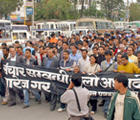
Hundreds of journalists,lawyers with other professionals took out a rally in the capital, Kathmandu, protesting the new media law.
Organised by Professionals for Peace and Democracy (PAPAD), hundreds of journalists, lawyers, university teachers, doctors, engineers, writers and civil society activists took part in the rally demanding immediate withdrawal of the ordinance that amends half a dozen media related laws. The government had introduced the law early this month—just ahead of the Dashain holidays.
Acting president of the Federation of Nepalese Journalists (FNJ) Shiva Gaule said they had no other option than to take to streets as the government was trying to gag the media by introducing harsh laws. He said the FNJ would also knock the door of the court challenging the ordinance.
The rally started from New Baneswore, in front of the Birendra International Convention Centre (BICC) and ended in a corner meeting at Maitighar Mandala. Representatives of various professional organizations addressed the meeting and demanded immediate withdrawal of the ordinance.
The new media law—that will last for only six months unless re-promulgated—has banned criticism of the king and royal family members and broadcast of news over the FM radio stations. The law has also raised the fine journalists and media publishers in defamation case to Rs 500,000 or two years in imprisonment or both.
Media activists said the government has introduced the new law to suppress all kind of opposition to the royal regime.


OHCHR Report to be Presented Next Week: Martin
Kathmandu Oct 21 - Representative of the Office of the High Commissioner for Human Rights(OHCHR)-Nepal, Ian Martin Friday said that despite the Maoist announced unilateral ceasefire, human rights abuses have continued.
"We welcome the reported reduction in killings since the Maoists unilaterally declared a ceasefire. Nevertheless some killings and other abuses are reported to have continued after the ceasefire and we are investigating these," Ian Martin told journalists today.
Martin said that although OHCHR-Nepal received general assurances of cooperation and commitments to human rights standards from the Maoists, they had not shown it by their actions.
"I am sorry to say that in only a very few cases have we received a response so far with action to address specific concerns," said Martin.
He informed that OHCHR-Nepal is engaged in investigating killings by the Royal Nepalese Army alleged to be in violation of international humanitarian law.
According to Martin, the first report of the High Commissioner for Human Rights in Nepal, which was released in New York during Dashain, will be presented at the General Assembly next week.

NBA demands speedy hearing on RCCC case

Kathmandu Oct 21 - Nepal Bar Association (NBA) has demanded that the Supreme Court speed up the ongoing hearing on the case relating to the constitutionality of the Royal Commission for Corruption Control (RCCC).
Similarly, the umbrella forum of professional lawyers has also urged the court not to delay its decision on a case seeking revision of the verdict on House dissolution. The case was opened nearly two months ago, but the court has not done anything since then.
NBA said it was forced to draw the attention of the court in both cases after the court failed to show the required promptness they deserve, given the gravity and national importance they bear.
Much to the disappointment of NBA, the court has been conducting the hearing on the RCCC case once a week. The lawyers have been demanding that the hearing be scheduled daily.
A delegation comprising NBA President Shambhu Thapa, Vice President Sher Bahadur KC, General Secretary, Madhav Basnet and member Tikaram Bhattarai called on the Chief Justice Dilip Kumar Poudel at his office and put forward their demands.
During the meeting the NBA delegation also urged Chief Justice Poudel to appoint lawyers in the Supreme Court, according to General Secretary Basnet. "He has promised to address our demands," he said.


Manipal Hospital announces compensation to victims

Kathmandu Oct 21-Manipal Teaching Hospital (MTH) has announced to provide Rs 200 thousand compensation and provide employment to a member of each family in the hospital based on their educational qualification to the families of ten people, who were killed when the roof of the hospital collapsed Thursday.
Similarly, the hospital announced Rs 50,000 compensation and free treatment to each of the injured persons.
According to a hospital source, those who died in the accident included patients who were taking rest in the waiting room and two staffers of the hospital. Hari Maya Acharya of Kahun, Kaski, and Sarswoti Gautam of Baglung’s Mulpani were the hospital staffers killed in the incident.
Others who lost their lives in the incident are Jagadish Gautam of Baglung’s Mulpani; Singh Bahadur Gurung, Dil Kumari Gurung and Chandra Kumari Gurung of Kaski’s Ghandruk; Khil Maya Thapa, Dhanmaya Khada, Durga Malla, Kalimaya Thapa of Tanahun’s Baidi.
Among the seven injured people, four are said to be in critical condition and are undergoing treatment at the hospital.
The Royal Nepalese Army, the Nepal Police, the Armed Police Force and hospital employees engaged in the rescue operation for over two hours, reports said.
A Mumbai-based construction company, Space Tech Engineering, which constructed the waiting room at a cost of around Rs 3 million in 2000 had guaranteed that it would last for 50 years, reports quoted Sanjay Kumar Gupta, engineer of the hospital as saying.
He also quoted the company as saying that the waiting room would resist earthquake up to a magnitude of 7 in the Richter scale.
NBA unsatisfied with appointment of judges

Kathmandu, October 20-The Nepal Bar Association (NBA) today expressed dissatisfaction with Chief Justice Dilip Kumar Paudel over the recent appointment of Supreme Court justices and poor representation of lawyers in the judiciary.

A delegation led by NBA president Shambhu Thapa expressed dissatisfaction with Chief Justice Paudel during a meeting. Noting that the Chief Justice had promised to appoint three lawyers as judges of the Supreme Court, the delegation said he had not been able to live up to his promise.

It may be noted that five Appellate Court Chief Judges were appointed as the Supreme Court Judges a month ago. Immediately after his appointment as the Chief Justice, Paudel had assured the NBA that he would select three lawyers as Supreme Court judges.

“We have clearly said that the Chief Justice did not live up to his words while appointing Supreme Court judges,” a central member of the NBA, Tikaram Bhattarai, told reports the Himalaya times. “The Chief Justice has he will keep the promise in the future,” he added.

The Chief Justice-headed Judicial Council recommends names to the King for the appointment of judges.“There are five vacancies presently,” Paudel said, adding: “The new appointments will also include lawyers.”

The Chief Justice and Supreme Court Registrar Dr Ram Krishna Timalsena held discussions with the NBA representatives for about an hour.President Thapa, vice-president Sher Bahadur KC, general secretary Madhav Banskota and members Tika Ram Bhattarai, Bhim Dhakal represented the NBA delegation.
During a meeting, Paudel assured the lawyers that the Supreme Court will give priority on hearing of the cases of national importance.Paudel also promised that he will schedule the case seeking the reinstatement of the dissolved House of Representatives in bench.

During the meeting, Thapa said six professional organisations of lawyers, journalists, professors, teachers, engineers and doctors will file a writ petition at the Supreme Court challenging the legality of the recently-promulgated controversial Media Ordinance that amended five acts related to the media in the country.

20 hurt as prisoners clash

Birgunj, Oct 20-Over 24 inmates were injured, seven of them seriously, when a fight broke out among prisoners over an issue related to the internal control of the jail yesterday night.The jail administration said the clash started when groups of inmates wanting to manage the prison clashed over who would take the responsibility.

The fight started at 11 pm and continued for three hours and the situation is now under control, the jail administration said.The 22, including Ganesh Thapa, leader of the group which had picked the fight have been kept in the Gol Ghar. They pelted stones at other inmates injuring them. The incident has also damaged the prison. The chief of the jail, Prakash Poudel, said there is a provision of keeping those involved in misbehaviour in jail for an additional six months in the jail.

Poudel added that the injured were taken to hospital for treatment and have been brought back to the prison.

Thursday, October 20, 2005


SC Issues Show Cause Notice to Tulsi Giri

Kathmandu, Oct 20-Responding to a contempt of court case, the Supreme Court today issued a show case notice to the Vice-Chairman of the Council of Ministers, Dr Tulsi Giri, as to why he spoke against the apex court and its justices.

A single bench of Chief Justice, Dilip Kumar Paudel, issued the order to Dr Giri following a hearing today. The bench asked Dr Giri to submit his written reply on the issue within seven days.

During the hearing president of the Nepal Bar Association, Shambhu Thapa, and bar members sought the apex court order against Dr Giri on the case. They claimed that Dr Giri, while delivering a speech in Biratnagar a month ago, had accused the Supreme Court and the justices of being influenced from political parties.

Dr Giri had also claimed that the 1990 Constitution had been a major obstacle for fulfilling King’s ambitions.

Media ordinance unconstitutional- legal experts

Kathmandu, Oct 20-Legal experts said the controversial media ordinance, promulgated just before Dashain, is against the norms of constitution so it cannot function to curtail the people’s right to information.
“The ordinance was prepared in haste by those people who know the least about the Constitution and the press,” said advocate Bhimarjun Acharya at a programme held by the Media Forum today to discuss the ordinance.“The ordinance allows any FM station to broadcast news till the NTV keeps airing news as it has treated both as one. The government cannot punish one leaving another safe,” he said.Acharya said that the ordinance is an amendment to four existing laws – Radio Act 2014, Rastriya Samachar Samiti Defamation Act 2019, Printing and Publication Act 2048, Press Council Act 2048, National Broadcasting Act 2049 and Defamation Act 2016.“Ordinances can be valid only if they are brought after proving their necessity for immediate purpose, not under someone’s desire,” he said.According to him, the ordinances should be brought as exception but they are treatedas rules, and they should not oppose the constitution from any angle.

“Any law or ordinance that is not just or fair cannot oblige the citizens to respect it in democracy,” he said.
“Acquiring licence to more than three media, transmitting, cancellation of press pass,informative versus news programmes, foreign news, news on royal family and inclusion of terrorism are some vital issues that curb the fundamentals of press freedom,” he said.

Advocate Shambhu Thapa, the chairman of Nepal Bar Association, said that all professionals will support the journalist’s fight against the ordinance as it is directly related with the civic right to expression.
Advocate Tikaram Bhattarai said that the present government has no right to introduce any ordinance as it lacks support from existing or dissolved House of Representatives. Shiva Gaule, the acting chairman of FNJ, said the government has to prove what problems it had to face by the previous provision of punishment, before increasing the fine.

Mainwhile ,The government on Wednesday has warned that action will be taken against those disobeying the `Ordinance amending some Nepal Acts relating to communications, 2005.’

The Ministry of Information and Communications (MoIC) said it has notified all the Frequency Modulation (FM) broadcasting institutions not to transmit or broadcast news-based programmes as provided for in the said ordinance.

The new ordinance bars FM radio stations from airing news-based programmes and allows them to broadcast ‘informative programmes’ only. The latest amendment in the National Broadcasting Ordinance 2049 B. S. has described the ‘informative programmes’ as those programmes prepared with the objective of providing information or raising public awareness on topics related to health, education, sports, population, weather or road transport.

Briefing media on the new ordinance on Tuesday, spokesman at the MoIC, Ratna Raj Pandey, had said the provision relating to broadcasting of news over FM stations will not be enforced until the apex court delivers final judgment on the issue.

The government notice, however, did not say what type of action will the media institutions have to face ‘’for violating the new law.’’

Wednesday, October 19, 2005


Maoist Leaders Yadav, Magar Jailed Under TADO

Kathmandu Oct 19-The Patan Appellate Court Wednesday remanded Maoist politburo leader Matrika Yadav and central leader Suresh Ale Magar to judicial custody in connection with their alleged involvement in the murder of then Inspector General (IG) of the Armed Police Force, Krishna Mohan Shrestha, in 2003.

A joint bench of justices Gyanendra Bahadur Karki and Laxman Mani Risal ordered their judicial custody after a close-door hearing on whether to grant them bail or to send them to judicial custody.

Police officials took the Maoist leaders to Nakkhu Jail, Lalitpur, after the court order. Advocate Surendra Mahato and nine other lawyers had argued from the defendants' side.

The Appellate Court had resumed recording the statement of the Maoist leaders on Tuesday. They were produced before the court for the first time on September 30.

Then on October 2, the court had postponed the hearing after Yadav gave ‘unwarranted’ statement regarding the charge against him. Another accused Ale Magar had during the first trial denied his involvement in the killing.

The Maoist leaders were arrested in India some 20 months ago and were handed over to Nepali authorities. Both remained in army custody throughout these months.

IGP Shrestha was gunned down - along with his wife and bodyguard - by Maoist assailants on the morning of January 26, 2003 in Kathmandu

Show cause notice to govt

Kathmandu Oct 19-The Supreme Court on Wednesday has issued show cause notices to various ministries and both the Houses of Parliament regarding the controversial media-related ordinance introduced by the government early this month.A single bench of Chief Justice Dilip Kumar Paudel ordered the government to attend the haring on the case on October 30. The case would be handled by a special bench.

The Prime Minister’s Office and Cabinet, Parliament Secretariat, Ministries of Information and Communications and Law, Justice and Parliamentary Affairs have to respond to the order, as they have been made defendants in the case.

During the hearing Nepal's former Attorney General Badri Bahadur Karki, advocates Dhrubalal Shresha, Madhav Kumar Basnet and writ petitioner advocate Ravi Raj Bhandari pleaded seeking the apex court stay order to the government not to implement the Ordinance issued on October 9.

Two lawyers Ravi Raj Bhandari and Kahar Singh Khadka jointly filed the petition seeking the apex court order to nullify the Ordinance. They claimed that the Ordinance curtailed the rights of the media guaranteed by the 1990 Constitution.

In their public interest litigation filed at the apex court on Tuesday, advocates Bhandary and Khadka had argued that the said ordinance is against the letter and spirit of the Constitution of the kingdom of Nepal, 1990, as well as Universal Declaration of Human Rights 1948 and International Covenant on Civil and Political Rights 1966 and, hence, should be declared null and void.According to the petitioners, the Ordinance was issued against Articles 1, 3, 11, 12 (2) (a), 13, 16, 69 72 (1 & 2) and 116 of the Constitution and against Article 19 of the Universal Declaration of Human Rights-1948, Article 19 of the Civil and Political Rights and various precedents established by the Supreme Court. “Thus, there is no other option than to declare the Ordinance void,” they claimed.

They also claimed that the issuance of the Ordinance has violated Article 35 (2) of the Constitution under which the King acts on the recommendation of the Cabinet.

The petitioners had made the Council of Ministers, Ministries of Information and Communications, Law, Justice and Parliamentary Affairs, House of Representatives and National Assembly as defendants.

In his verdict, CJ Poudel also ordered that the defendants be also made present during the hearings on whether an interim order needs to be issued or not, as demanded by the writ petitioners.

Six Police officers held for looting

Kathmandu, Oct 19-Six police officers, including an inspector, are in detention at the Kathmandu District Police Office (KDPO) on dual charges of looting and trying to sell the rare Yarshagumba (Caterpillar Fungus) herb in the capital some days ago.

They have been remanded in police custody after the police sought time to interrogate the accused and come up with a complete report on both the crimes. According to a police source, a group of six police officers, along with two civilians, was involved in the looting of 12 kg of Caterpillar fungus (Cordyceps sinensis) at Swayambhu on September 14.

Those who have been taken into custody are KDPO Inspector Bimal Raj Kandel; Sub-Inspectors Raju KC, Santosh Swar and Suraj Khadka; and Assistant sub-Inspectors Roshan Shah and Suraj Khadka.
The two civilians are, however, absconding. Police said that they were also looking into the possible involvement of Constable Kishan Chaulagain in the crime. Meanwhile, police sources revealed that the group of police officers involved in the looting of 12 kg of Yarshagumba herb from Swayambhu were arrested on a tip-off as they were trying to sell their booty to Yog Bahadur Singh, a local businessmen. Police are also probing into the role played by Singh. While the Deputy Inspector General of Police at the Valley Police Office, Ranipokhari, Krishna Basnet, independently confirmed arrests of some police officers in the case. He, however, declined to confirm the names of those detained. “I can’t disclose the names of the police personnel as the case is still under investigation,” he told this daily when asked for the names of the detained police officers.

The trading of Caterpillar fungus, considered a valuable aphrodisiac in high demand in the international market, including in China and India, is illegal in Nepal. But apparently, those who are involved in this trade are ready to ignore the risks if some money can be made.

Same As, Police have arrested Roshan Kumar Mandal, 18, of Janakpur municipality Ward No. 4 who tried to carry out a burglary by poisoning five children of the same locality.

Mandal had fed peda laced with poison to the children. Rampabitra Mukhiya, 12, and Bima Kumari Mukhiya, 2, who fell seriously ill after eating the poisoned peda have been hospitalised.

According to police, Mandal said he had been ordered to carry out the poisoning by Sriprasad Shaha, also of Janakpur. Police are looking for Shaha, it is stated.

Tuesday, October 18, 2005


Court resumes recording Maoist leader Yadav’s statement

Kathmandu, Oct 18-The Patan Appellate Court Tuesday resumed recording the statement of Maoist politburo member Matrika Yadav in connection with his alleged involvement in the murder of then Inspector General (IG) of the Armed Police Force, Krishna Mohan Shrestha, in 2003.
Yadav and Suresh Ale Magar, another central Maoist leader facing the same charge, were produced before the court on September 30 for the first time.
Then on October 2, the court had postponed the hearing after Yadav gave ‘unwarranted’ statement regarding the charge against him. Another accused Ale Magar had denied his involvement in the killing during the first trial.
The Maoist leaders were arrested in India some 20 months ago and were handed over to Nepali authorities. Both remained in army custody throughout these months.
IGP Shrestha was gunned down - along with his wife and bodyguard - by Maoist assailants on the morning of January 26, 2003 in Kathmandu
The two are in police custody on charge of killing Shrestha. The two Maoist leaders, along with Maoist supremo Prachanda, Ram Bahadur Thapa ‘Badal’ and Baburam Bhattarai, have been charged with murder by the government for the killing of Shrestha, his wife and a bodyguard in a shootout carried out by suspected Maoists in Lalitpur over two-and-a-half years ago.
The government has demanded maximum punishment for the accused under the clause 3 of the Terrorist and Disruptive Activities Control Ordinance. The two leaders have been kept in detention under the same ordinance.
Madagascar court jails Nepali brokers

Kathmandu, Oct 18 - The Madagascar Supreme Court has sentenced two Nepali brokers arrested on charges of illegally recruiting Nepali workers to five years in jail.
Shivaraj Kadel and Gopal Chandra Shrestha along with other brokers had lured 13 Nepalis of high-salary jobs in Madagascar, Southern Africa, but left them stranded there, some five months ago.
Slapping the jail term on Monday, the court also ordered Kadel and Shrestha to pay a compensation of US $ 3,500 to each victim within the next ten days, according to Siddi Bahadur Katuwal, the local guardian of the victims.
Operating their business from Mumbai, India, the brokers have been illegally recruiting workers in Madgascar after collecting an amount of Rs.200, 000 to 300,000 from each aspiring worker.
Katuwal said while most of the victims have managed to return to Nepal, three were still stranded.
Writ Against New Press Law

Kathmandu, Oct 18-A Public Interest Litigation petion was filed today in the Supreme Court challenging the recently promulgated Ordinance that amends some acts related to the media in the country.
The apex court registered the case this afternoon. A group of advocates including Rabi Raj Bhandari filed the case in the court.
The petitioners have demanded the Supreme Court's intervention to nullify the ordinance which they called was aimed at curbing the press and the rights of the people. The petitioners have argued that the ordinance contradicts with the constitution of the country which guarantees the freedom of expression.
The King promulgated the ordinance on October 9. Local journalists, human rights activists, and international press and rights bodies have criticised the ordinance saying it a draconian law that is against the principles of demiocracy and human rights.
Nepal Slips to 117 on Corruption Perception Index 2005

Kathmandu, Oct 18-Nepal has stood in the 117th position among the 159 countries surveyed in the Transparency International's Corruption Perception Index 2005 with a score of 2.5 out of a clean score of 10, according to the latest ranking from international corruption monitoring body.The Transparency International has reported an increase in perceived corruption in Nepal from 2004 to 2005.
Nepal was in 90th position among the 146 countries surveyed with a score of 2.8 out of the clean score of 10 in the Corruption Perception Index 2004.Nepal scored 2.5 out of 10 where a score close to 10 indicates that a country is perceived to be "highly clean" and the higher a country is placed on the index, the less corrupt it is believed to be.
"An increase in perceived corruption from 2004 to 2005 can be measured in countries such as Costa Rica, Gabon, Nepal, Papua New Guinea, Russia, Seychelles, Sri Lanka, Suriname, Trinidad & Tobago and Uruguay," a TI report said.
Conversely, a number of countries and territories show noteworthy improvements - a decline in perceptions of corruption - over the past year, including Estonia, France, Hong Kong, Japan, Jordan, Kazakhstan, Nigeria, Qatar, Taiwan and Turkey.
According to the latest TI report, Bangladesh and Chad are lowest in the list with a CPI score of 1.7. Pakistan and Sri Lanka stand in 144th and 82nd position with the CPI scores of 2.1 and 3.2.Iceland has become the most clean country with a CPI score of 9.7. Finland and new Zealand stand second in the list with the score of 9.6. While UK and USA stand in 11th and 17th positions with the score of 8.6 and 7.6 respectively. India and China stand in 88th and 77th positions with the score of 2.9 and 3.2 respectively.
According to the TI report, over two-thirds of the 159 nations surveyed in scored less than 5 out of a clean score of 10, indicating serious levels of corruption in a majority of the countries surveyed.The report says: In the case of higher-income countries such as Canada and Ireland, however, there has been a marked increase in the perception of corruption over the past ten years, showing that even wealthy, high-scoring countries must work to maintain a climate of integrity.The 2005 Index bears witness to the double burden of poverty and corruption borne by the world’s least developed countries.
“Corruption is a major cause of poverty as well as a barrier to overcoming it,” said Transparency International Chairman Peter Eigen. “The two scourges feed off each other, locking their populations in a cycle of misery. Corruption must be vigorously addressed if aid is to make a real difference in freeing people from poverty.”Despite progress on many fronts, including the imminent entry into force of the United Nations Convention against Corruption, seventy countries - nearly half of those included in the Index - scored less than 3 on the CPI, indicating a severe corruption problem. Among the countries included in the Index, corruption is perceived as most rampant in Chad, Bangladesh, Turkmenistan, Myanmar and Haiti – also among the poorest countries in the world.
CJ Poudel lays stress on gender equality

Lalitpur, Oct 17-A three-day workshop on “Gender Equality and Justice for Trial Court Judges and Public Prosecutors” organised by Pro-public and supported by the Supreme Court of Nepal and judicial associations under the aegis of Asia Pacific Advisory Forum on judicial education on equality issues kicked off in Lalitpur today.

Speaking at the inaugural session of the workshop, chief justice Dilip Kumar Poudel said gender equality and justice are challenging issues against human rights and dignity which not only is a malady of the third world but also of the first world. “Prejudice and delusion of people is responsible in creating the gap of gender inequality,” he said.

There is an urgent need to address gender equality from the right-based approach in order to remove misconceptions, he said, adding that substantive equality was essential for gender justice. Citing various international conferences ratified by Nepal, Poudel said Nepal has constantly shown concern for global declarations involving gender issues.

Dr Shree Krishna Shrestha, president of the Forum for Protection of Public Interest of ProPublic, while highlighting the objectives of the seminar said that the definition of social values of yesteryears had changed with time and that people need to accept and adopt the changes for the betterment of mankind. Former justice of the Supreme Court Laxman Prasad Aryal, while terming equality and justice synonymous said declarations on equality are formal approaches. He added that these need to be applied in substantive justice processes.

Kalyan Shrestha, a sitting Supreme Court judge, said civil and political rights are the not only indicators of whether a country is moving towards the edge. Gender issues are equally important, he said.
Presenting the theme speech on “Role of judges and public prosecutors in promotion of gender justice”, justice DR Campbell of the Federal Court of Canada said gender discrimination is found in every aspect of daily life in society.

NBA draws attention of SC, justices

Kathmandu, Oct 18-Legal experts today drew the attention of the Chief Justice, Dilip Kumar Paudel and justices of the Supreme Court (SC) to the ordinance issued on October 9 to amend the Media Acts. “The Supreme Court and its justices should think about the ordinance seriously,” president of Nepal Bar Association (NBA), Shambhu Thapa, said. He was speaking at a programme organised by the Federation of Nepali Journalists (FNJ) to discuss ways to fight the ordinance. He also said the SC should make its stand clear on the rule of law in such a crucial situation. “The Supreme Court had on several occasions adjourned hearings on important cases and if such actions are repeated again, the NBA would raise its voice against it,” Thapa said. “We are ready to face challenges while fighting the ordinance,” he said. “If the SC does not act properly while handling the case, we will go to the international forum and raise our voices there,” Thapa added. He also advised the FNJ to move the SC and launch street protests. “We have no option but to fight against the King legally and through street protests,” Thapa added. Senior advocates Radheshyam Adhikary and Shree Hari Aryal, former Law Minister Subash Chandra Nembang and former NBA president Harihar Dahal said the ordinance was issued unconstitutionally.
They advised the FNJ to move the SC as it has always safeguarded the freedom of the media even in the Panchayat regime.

Monday, October 17, 2005

NBA to Support FNJ in Fight Against Black Law

Kathmandu, Oct 17-The Nepal Bar Association (NBA) today advised the Federation of Nepalese Journalists (FNJ) to move the apex court to challenge the recently promulgated Ordinance to amend some Media Acts, which the journalists and rights activists said is aim at controlling media. The NBA also assured the FNJ of every legal aid for the purpose from the Bar body’s side.

The NBA’s assurance came during a discussion organised by the FNJ to formulate strategy to fight against the Ordinance, which was promulgated on October 9.

At the programme, NBA president Shambhu Thapa said the Bar body would provide every support to the FNJ to nullify which he called the ‘draconian’ ordinance. Thapa said Promulgation of the Ordinance was a part of the King’s bid to strengthen his moves on October 4, 2002, and February 1, 2005.

Thapa said the Ordinance clearly contradicted with the Constitution and the Supreme Court can nullify it. He alleged that the government issued the Ordinance not only to curb the Press but also to curb the rights of the people guaranteed by the Constitution. He called on everyone to defy it.

Senior advocates Radheshyam Adhikary, Shree Hari Aryal, and former law minister Subash Chandra Nembang, vice-president of the NBA Sher Bahadur KC, general secretary Madhav Banskota and advocate Tika Ram Bhattarai and Madhav Kumar Basnet also advised the FNJ to move the apex court to challenge the Ordinance.

Govt media fiat has undermined SC, say lawyers

Kathmandu, Oct 16-Two lawyers said today the government has seriously undermined the Supreme Court stay order by issuing an ordinance to ban broadcasting of news by FM radio stations. They said they are preparing to seek legal remedy against the government’s move.

The Nepal Bar Association (NBA) is studying how to seek legal remedy by challenging the Ordinance promulgated to amend Media Acts.“Promulgation of the Ordinance is an action by the government to undermine the Supreme Court’s orders,” president of Nepal Bar Association, Shambhu Thapa, told this daily today.

The apex court had on August 10 issued a stay order allowing FM stations to air news and
later gave a go ahead with the order on September 7 in a decision against the government’s attempt to vacate the order.

Thapa also added that the NBA is going to hold discussions with the Federation of Nepalese Journalists (FNJ) tomorrow on how to provide legal remedy on the issue. The FNJ has already said that it would move the apex court against the Ordinance. “We will file either a contempt of court case against the government or a writ petition seeking nullification of the Ordinance,” Thapa added.

“This is undermining of the apex court order,” advocate Agni Kharel, who had pleaded before the apex court on behalf of the FM stations, said.

“The government has tried to undermine the apex court while the court is preparing to hold final hearing on the case,” Kharel added. The apex court has already scheduled November 29 for the final on hearing of the case.

“Though the government has authority to promulgate ordinances, promulgation of this one is a contemptuous action because it has tried to affect a sub-judice case,” he added.

Mainwhile,The copy made available to newspapers today states that the ordinance has amended Radio Act 2014, Rastriya Samiti Act 2019, Press and Publication Act 2048, Press Council Act 2048, National Broadcasting Act 2049 and Defamation Act 2016. The Ordinance has banned the publication of all materials: that would affect the political parties negatively, that are obscene, provokes any arms group against the government, terrorises the public, undermines any community, goes against the non-alignment foreign policy of the government, or the material prohibited by existing laws.

The amending of the Press and Publication Act 2048 has restricted the press from criticising the King and members of the royal family. Earlier, only the King only was beyond criticism.

The gazette states that the government will impose a fine of upto Rs one lakh to the publisher or the editor of the material that invokes the Defamation Law. This increase in fines is nearly ten times that imposed by the then parliament.

Bring detainee and explain, SC orders govt

Kathmandu, Oct16-The Supreme Court (SC) today ordered the Home Ministry and government authorities to produce Bimal Raj Giri, a detainee, before the apex court on Wednesday to look into the legality of Giri’s detention.

Responding to a habeas corpus petition, a single bench of justice Ramkumar Prasad Shaha issued the order. The bench directed the District Police Office, Kavrepalanchowk, and the Chief District Officer, Shambhu Koirala, to produce Giri before the Supreme Court on Wednesday. Giri has been in police detention in Kabhreplanchock district after his arrest three months ago from Dolalghat but no specific charges have been levelled against him.

The order came following today’s initial hearing on the petition. The bench has also directed the concerned authorities to submit their explanations within three days as to why Giri is being held.Earlier today, Bimal’s brother-in-law, Amrit Kumar Puri, had filed a habeas corpus petition before the apex court.

The petition has accused the government authorities of lying before the SC when the apex court heard a separate habeas corpus petition against Giri’s detention, which was filed three months ago. “During the hearing on October 7, the authorities told the SC that they had released Giri. But immediately after his release, he was re-arrested by the police under the direction of Chief District Officer Shambhu Koirala,” the petition states. Giri was arrested from Dolalghat bazaar three months ago without any specific charge and later freed on October 7 after SC hearings on the legality of his detention.

11 rights cases reported during Dashain

Kathmandu, Oct 16-The National Human Rights Commission received eleven complaints concerning cases of abduction, disappearances and extortion during the festive season of Dashain.

The commission’s Protection and Monitoring department in Kathmandu and regional offices remained open throughout the festival. The NHRC received six complaints from the Kathmandu valley, two each from Biratnagar and Nepalgunj regional offices and one from Pokhara office. “We also received extortion complaints from Ilam by telephone. The Maoists reportedly demanded Rs 10,000 each from the concerned individuals,” said NHRC member Sudip Pathak.

The commission had its 10 officers and one vehicle on standby in Kathmandu throughout Dashain. One officer on rotation reported to the NHRC everyday from 10.00 am to 1.00 pm and the remaining officers remained on standby with their mobile phones on while celebrating the festival. However, no major incident of human rights violation was reported during the festival, he said.

The NHRC directed its Biratnagar regional office to send a team to probe yesterday’s incident of Maoists killings at Limbu Chowk of Belabari-6, Morang district, Pathak said. The NHRC’s Protection and Monitoring department remains open throughout the year including Saturdays and government holidays.

Sunday, October 16, 2005

Polls Without Maoists Serve No Purpose-Legal Experts

Kathmandu, Oct 16-Legal experts and members of the civil society here said today that the proposed parliamentary election would serve no purpose towards establishing peace and stability unless the state addresses the issues raised by the Maoists who are the main cause of political instability and constitutional crisis in the country for nearly a decade.

They also said the deadline set for the parliamentary election has been announced against the “constitutional spirit” which expects “conducive atmosphere” for holding any election without fear and threat.

In his Dashain message to the countrymen on October 12, the King announced that he had ordered the Election Commission to conduct parliamentary election within the year of 2063 BS (mid-April 2007).
“Setting deadline for the parliamentary polls that is going to be held one-and-half-year later will have no meaning as similar announcements made during the tenures of Lokendra Bahadur Chand, Surya Bahadur Thapa and Sher Bahadur Deuba did not materialise,” said former law minister Nilambar Acharya at the Reporters' Club.

The King should first give up the chairmanship of the council of ministers if he really wants to hold the general election in a free and fair manner, he said, adding that the deadline for the parliamentary election was set to convalesce from international isolation.

Former justice of the Supreme Court Krishna Jung Rayamajhi said that nothing has been mentioned about the Maoists, who are the main cause of political instability and constitutional crisis, while setting the deadline for general polls. “We have been facing constitutional crisis due to the Maoist insurgency. But we want to conduct elections without duly addressing the core issue,” Rayamajhi said.

Shambhu Thapa, president of the Nepal Bar Association, said that it would be impossible to conduct any election without creating conducive environment for the same. “It is not the question of holding election, the question is to resolve the conflict that has already claimed the lives of more than 15,000 people,” he said.
He said the government should have utilised the Maoists' unilateral ceasefire as an opportunity to find lasting solution to the crisis rather than opting for elections. According to him, parliamentary election could be held only after holding a political conference of all the parties in conflict.

President of Civil Society for Peace and Development Dr Sundar Mani Dixt said that there would not be any credibility of the general election to be held amidst the boycott of the major parties and the Maoist threat of reprisal. He said that the deadline for general election without resolving the Maoist problem was just like putting the cart before the horse. “It will also be deemed as referendum against the King if the percentage of votes cast remained too low,” he said.

Economist Himalaya Shumsher Rana raised the apprehension of the political parties, who are suspicious that the general election would be held amidst massive rigging given the appointments of zonal and regional administrators. He, however, said that election was the only alternative to bring the constitutional process back on track.

FNJ announces protest against 'black ordinance'

Kathmandu, Oct 16-The Federation of Nepalese Journalists (FNJ), the umbrella organisation of all journalists in Nepal, has said it is preparing to launch various protests against what it calls the draconian media ordinance issued by King Gyanendra last week.

The FNJ in a statement on Sunday announced that it would head its movement against the ‘black ordinance’ legally as well as through media campaign and street protests.

As part of the preparations for its fight against the restrictive press laws, the Federation is organising an interaction with law experts on Monday while similar interactions will be conducted in districts on Wednesday and Thursday involving media persons, civil society representatives and human rights activists.

The Federation said it is preparing to move the Supreme Court against the new restrictions imposed on the free press.

Similarly, the FNJ has also decided to carry out nationwide demonstrations in protest against the media ordinance on October 21. According to the statement, the movement against the new curbs would continue unless they are repealed.

King Gyanendra promulgated the new media ordinance - at the recommendation of the Council of Ministers on October 9.

Including national and international media rights groups, major political parties of Nepal and the Indian government have also denounced the new restrictions on the media.


mainwhile,The Federation of Nepalese Journalists has decided to move the Supreme Court against the newly introduced media ordinance. Issuing a press statement sunday, the umbrella organization of Nepali journalists said that it will take out a nation-wide protest rally against the 'black ordinance' on Friday.

The protest rally in Kathmandu would begin from New Baneshwor at 3 p.m. The FNJ also decided to hold a broad interaction with legal experts on Monday to discuss the strategies to initiate legal fight against the ordinance.

'SC can annul media ordinance'

Kathmandu Oct 16 - Speaker of the dissolved House of Representatives, Taranath Ranabhat, on Saturday said that the Supreme Court can revoke the recently promulgated media ordinance if it contravenes with the constitution.

Talking to journalists at Tribhuvan International Airport before departing for Geneva to attend the 113th conference of World Inter-Parliamentary Association, Ranabhat said, "Since the present constitution has guaranteed press freedom and rights of the fourth estate, the apex court can annul any ordinance that contradicts with the constitution and prevailing laws."

Reminding the past precedents of Supreme Court on media he said, "If the recent ordinance is against the past precedents, it can be revoked."

However, Minister of Law, Justice and Parliamentary Affairs, Niranjan Thapa, who is accompanying the Speaker to the conference, argued that the ordinance was not against the rights of journalists, freedom of expression and press freedom." Rather it is brought to discipline the press," he said. He also informed that the government is working to develop a mechanism to monitor the FM radios.

Govt Prepares to Privatise NIDC

Kathmandu, Oct 16-As per the announcement made in the budget, the government is set to appoint an independent valuator for evaluating the property and liabilities of Nepal Industrial Development Corporation (NIDC) for an early privatisation of the financially-crippled public enterprise.

“The government has already consented to appoint an independent valuator for the valuation of assets, properties and liabilities of NIDC,” said a senior official at the privatisation cell of the ministry of finance. He cited NIDC’s failure to make promised progresses in recent time as one of the main reasons for privatising it.

A meeting of the privatisation cell next week will appoint the valuator, the official told The Himalayan Times Reports . The valuator will be given 60 days time to valuate all the fixed, core and portfolio assets as well as liabilities of the ailing state-owned public enterprise, he added.

The official also said that MoF has already received a couple of proposals from independent financial consulting firms to be the valuator. “The valuator’s report will pave the path for early privatisation,” he said. Earlier the government had decided to liquidate the corporation following a diagnostic study report by PriceWaterHouseCoopers Ltd that pointed out that the state owned enterprise is ‘virtually bankrupt’.
However, protests by NIDC employees and shareholders made the government to alter its decision and go for privatisation. Accordingly to finance minister Madhukar SJB Rana’s budget speech, the government is supposed to have privatised the NIDC within the current fiscal year 2005-06.

The PriceWaterHouseCoopers report had found that NIDC is ‘technically insolvent’ with an alarming 98 per cent non-performing loans. Findings of the study, which was carried out with financial assistance from the Asian Development Bank under the Financial Sector Reform Programme, came under fire from both NIDC employees and public shareholders. Later the government had to alter its decision of liquidation and opt the privatisation.

The employees have flayed the recommendations in the report as contradictory and ironical, as it had suggested Rs 300 million for smooth resumption of NIDC with reform measures, whereas liquidation cost was put at an additional Rs 610 million. Established in 1959, NIDC is a state-owned industrial development bank, wherein the government holds 83.14 per cent of shares. It has made investments in more than 150 different industries throughout the country and its total loans and advances stand at Rs 5.725 billion as of the fiscal year 2001-02. The total loss of the corporation had crossed Rs 991.10 million in 2002, with a cash loss of Rs 189.76 million. The loans yet to be collected by the corporation amounts to Rs 2.15 billion. NIDC has fixed assets worth over Rs 6 billion including core asset of Rs 2.25 billion and portfolio assets of Rs 4 billion and liabilities worth Rs 1.84 billion. The authorised capital of NIDC is one billion and paid-up capital is Rs 415.8 million, as per the record.

Over politicisation during the appointment of the board of directors, bad governance and poor credit risk assessment are some of the reasons that almost every public enterprise is facing a fate akin to NIDC in the country.

Saturday, October 15, 2005

Less crime during Dashain festival

Kathmandu, Oct. 15 Incidents of loot and stealing in Kathmandu Valley were drastically low during this Dashain than in the previous years. In the last three days, there were just six incidents of looting and one of stealing and nine persons have been arrested.

Deputy Inspector General of Police (DIG) Krishna Basnet claimed that such criminal activities were virtually nil compared to previous Dashains and even on normal days. “Because the police worked so vigilantly that such activities were curbed,” he said. Even on normal days, there are three or four incidents of looting and stealing on an average.

Police had deployed temporary picketing groups at dozens of places of the valley. Basnet said that in Kathmandu City alone there were picketing teams in civil dresses at 96 places. Besides, such teams were deployed at commercial points and bank areas of Lalitpur and Bhaktapur.

Another police official said the people becoming more aware and the arrest of known looter and thieves before Dashain also helped. Meantime, police deployed from Sorhakhutte has arrested Raju Lama and Lekh Bahadur Chhantyal, while they were running away looting Rs. 8,000 from Shyam Lama of Naya Bazaar Thursday afternoon. Similarly, police from the crime investigation branch have arrested seven persons for pick pocketing in the transportation and commercial places.

According to DSP Pitambar Adhikary, those arrested were Ramesh Pandey, 26, of Kavre; Milan Adhikary, 24, and Ajay Karki, 16, both of Sindhupalchok; Raj Kumar Rai, 24, of Sunsari; Som Bahadur Gurung, 21, of Gorkha; Raj Kumar Katuwal, 28, of Gaushala and Deepal Uprety, 25, of Lazimpat.

Police said two unidentified men snatched away gold chain of Shila Shakya, 58, of Sitapaila at about 11:30 Thursday morning. Similarly, two unidentified persons grabbed and fled gold chain from Rajina Shrestha of Kirtipur at Soaltee turn of Kalimati. According to police, five persons brandishing sharp weapons looted Rs. 170,000 worth of goods, including one Samsung mobile, from the room of Singhe Lama at Banasthali at about 7 Wednesday evening. Lama of Sindhupalchowk had rented room at Rambabu Shrestha’s house and the robbers came to the house and took Lama under control before taking away the goods.

The same day, gold ornaments worth Rs. 60,000 were looted from the house of Anita Ghimire of Dhumbarahi. The looting took place at about 1 pm. In another broad daylight robbery one day earlier, some looters took away gold chain weighing about four tolas from Madhu Tamang of Lalitpur.

Police said that gold ornaments were stolen from the Laxmi Shrestha of Sukedhara of Kathmandu. Thieves broke open the wooden cupboard and took away the ornaments.

Thursday, October 13, 2005

EC to Open Parties’ Registration

Kathmandu, Oct- 13-The Election Commission (EC) is going to invite political parties for registration for the forth-coming municipal election scheduled for February 8 next week.
EC spokesperson Tej Muni Bajracharya said the registration would begin from the next week after the government offices resume work after the Dashain vacation reports Himalaya times . "For registration, the parties should present their statutes and name list of the executive committees," he said.He also said that no further discussion would be held with those political parties, which have decided to boycott the election.
Meanwhile, Election Commission has recently published its Code of Conduct for the municipal election.The political parties and candidates taking part in the municipal polls must not disseminate any opinion against nationality, national freedom, sovereignty as well as parliamentary system, constitutional monarchy, multi-party democracy and free jurisdiction, according to the Code of Conduct.
A candidate may criticise another's policy, programme and public activities but cannot mud-splash on other's character, and criticism should consider other's democratic rights and language should be decent.The Code of Conduct also adds that any campaign, demonstration, rally and mass meeting should be organised only after taking permission from the District Administration Office.
The candidates must not use any plastic; clothes banner and paint while campaigning and should avoid religious, archaeological and historical monuments as well as government offices. Instead, they can publish monochrome pamphlets and posters within the size of 6"x10" and 18"x22".
In the same way, a candidate of mayor of a metropolis cannot spend more than a mere Rs 200,000 for election campaign. The code of conduct also confines the expenditure amount for candidates of mayors of sub-metropolis and municipalities. Similarly, the same also binds limitation of expenditures for deputy mayors and ward chairmen and members.
A candidate for mayor and deputy-mayor of metropolis can hire three vehicles and three loudspeakers, while those of sub-metropolis and municipality can hire only two and one respectively.The candidates are obliged to make a daily expenditure logbook that would be presented to the Election Commission.
Human Rights Crisis in Nepal-UN Report

Kathmandu, October 13-In a fresh jolt to Nepal government a UN report made public on Wednesday has pointed to the serious human rights violations in the country.

The Office of the UN High Commissioner for Human Rights (OHCHR), set up in Nepal in May, has in its report, released Tuesday, found the state guilty of extra judicial executions, civilian killings, disappearances, arbitrary arrests and curbs on the rights to freedom of expression, assembly and association.
The report was presented to the Third Committee of the 60th UN General Assembly in New York.
Though King Gyanendra, in a national address on Wednesday, said the security situation had improved in the kingdom since he had seized power in February, the report said the OHCHR as well as other UN rights bodies were concerned about "serious violations of international human rights and humanitarian law committed by state authorities and by the Communist Party of Nepal-Maoist."

The OHCHR said it has received reports of indiscriminate shooting or bombings by security forces causing deaths of civilians, threats to members of the local population accused of providing the Maoists with food or shelter and the use of civilians under duress as informers, thereby placing them at risk of reprisals by the rebels.

The report mentioned two specific cases of rights abuse by the state. An army sergeant had detained and tortured an individual in Kathmandu, it said, "apparently for private motives."
When the victim sought compensation he was rearrested in violation of a Supreme Court order and tortured more severely.
In another case, a minor was beaten up in the main Kathmandu police station shortly after OHCHR had interviewed him.
The report also refers to the formation of self-defence or "vigilante" groups in a number of districts since this year.

The groups, created in areas where the Maoists have a stronghold, are reported to have committed serious human rights abuses and other crimes with the direct or indirect support of the security forces, it said.
The OHCHR said it would provide the UN Department of Peacekeeping Operations information on individuals and units implicated in human rights violations and on officers who had threatened or intimidated victims or witnesses for a review of their suitability for deployment under the UN flag.

The OHCHR also expressed concern at serious breaches of humanitarian law committed by the Maoists, like unlawful killings, rape, extortion, mass abduction and forced recruitment and labour. These could constitute war crimes and crimes against humanity, it said.

Related site:
human rights reports on Nepal

Wednesday, October 12, 2005

Arrested students to face Public Offence Act trial

Kathmandu, Oct 11 - Authorities in Pokhara are preparing to charge three students under Public Offence Act who were arrested for burning an effigy of regression last Friday.

Students of Prithvi Narayan Campus had burnt the effigy of what they called the "royal regime" during protest demonstrations at Shrijana Chowk coinciding with the King's arrival. The programme was organized by the Nepal Students' Union (NSU) of the campus.

The arrested students include NSU college president Kamla Mani Dhakal and members Bhanubhakta Dhakal and Mohan Pandit.

Kamalmani was arrested while he was returning home from the NSU office in Chipledhunga after participating in the protest the same day.

Bhanubhakta and Mohan were held in custody after they reached the police station on Saturday. Police had called the two at the office mentioning that Kamalmani wanted to meet them.

Report on Justice Jha case soon

Kathmandu, Oct 11-The report by a three-member Justice panel investigating the alleged corruption by Supreme Court Justice Paramananda Jha while releasing a drug peddler Dil Bahadur Gurung on bail will be produced before the Judicial Council headed by Chief Justice soon. “The panel will submit the report to the Council immediately after Dashain,” a highly- placed source at the Supreme Court told himalaya times reports. He added that the panel had already completed its investigation on the alleged corruption by Justice Jha.

The Committee has recorded the statements by Justice Jha and the lawyers who pleaded on behalf of Gurung. “Jha claimed that it was his job to release Gurung on bail since no direct evidence was produced against him. Justice Jha was accused of taking bribe while releasing Gurung who was arrested two years ago from Kathmandu while trying to smuggle 779 kg of marijuana. “Jha denied that he took any bribe or was influenced by anyone while releasing Gurung,” the source said quoting justice Jha. Justice Anup Raj Sharma, Khil Raj Regmi and Ram Prasad Shrestha have been investigating the issue.

Monday, October 10, 2005

New Media Law Introduced

Kathmandu, Oct 9 King Gyanendra has promulgated an ordinance which amends the existing press laws in the country.The ordinance promulgated is the "Ordinance amending some Nepal Act related to Media-2062".

It is said that the ordinance has introduced the controversial press law reportedly passed by the Cabinet some four months ago to curb press freedom in Nepal.

The new law prohibits an organisation or individual from receiving licenses to operate radio, television and newspapers. Those who have already been granted licenses to operate all the three media previously must choose any two within a year.

The controversial press law, which the government could not introduce back then following immense pressure from national and international communities, prohibits an organization or individual from receiving licenses to operate radio, television and newspapers.

It also contained new legal provisions to prohibit any news item that “causes hatred or disrespect” to the king and members of the royal family, as opposed to only the king previously.

Fines and punishment for those found violating the laws has been increased in the press law. It also had provision for fining editors or publishers publishing "materials deemed to be falling under banned items" up to Rs.100,000, instead of the previous Rs.10,000. Similarly, anyone publishing, translating and importing banned items would be liable to face a fine 10 times more than the present amount of Rs.50,000.

Sunday, October 09, 2005


People won't accept another constitution: Upadhyaya

Kathmandu Oct 9-Chairperson of the drafting committee of the Constitution of Nepal 1990 and former chief justice Bishwa Nath Upadhyaya has warned not to discard the present constitution saying that the king would have no place in the constitution to be formulated by the people in case the latter introduced a new constitution.
Talking in Kantipur Bahas, a talk programme of Kantipur Television, Upadhyaya Saturday said that people will not accept any constitution issued by the King against the people's wish.
Claiming that all the activities of the King after October 3 2002 are unconstitutional, Upadhyaya said that the Supreme Court (SC) can ask the king's appointees to justify their appointments according to the constitution. "If the appointment is not as per the Articles and Clauses of the constitution, the court can nullify the appointment," he said.
Upadhyaya said that the SC has the right to ask the constitutionality of the king's appointments.
"Although the current constitution doesn't allow the Supreme Court to directly ask about the king himself, it does have the right to ask the constitutionality of his appointments," he added.
He added that the formation of Royal Commission for Corruption Control citing Article 127 is unconstitutional as the article is only to solve obstacles in the implementation of the constitution.
Referring to the ongoing debate about the need of election of the constituent assembly, Upadhaya advised to go for the referendum to decide whether the people are in favor of preset constitution or the election of the constituent assembly.
I/NGOs not to accept Code of Conduct

Kathmandu Oct 9-Amid growing pressure on the government not to implement code of conduct to regulate national and international non-governmental organizations (I/NGOs), more than two dozens I/NGOs working in 16 districts of the eastern region warned that they would not accept the proposed Code of Conduct to regulate the I/NGOs by the government.
A meeting of the I/NGOs including Plan, Action Aid, United Nations Human Resources, Informal Sector Service Center (INSEC), Abhiyan Nepal and others on Saturday also claimed that the Code of Conduct prepared to introduce regulations unilaterally is against international law, according to reports.
They said that the government should not impose its directives on the activities run by the citizens' involvement.
Report quoted Keshav Dahal, NGO federation eastern region coordinator as saying, "We haven't said we won't comply with the government's directives. But the government should not think we are its wings, we need to work independently."
International communities are also protesting the government's move to introduce new ordinance to control I/NGOs saying it as a violation of the international human rights commitment.
Earlier Chief of the United Nations Office of the High Commissioner of Human Rights Ian Martin wrote a letter to the Ministry for Women, Children and Social Welfare not to issue such ordinance to control I/NGOs
Scuffle over money lands cop in jail

Kathmandu, Oct 9-A scuffle between a street vendor and a police officer last night over a 100-rupee-note saw the latter, a Sub-Inspector, end up behind bars. The police officer was released early this morning.The fracas ensued after sub-inspector Indra Prasad Subedi gave the vendor, Manu Rai, a 100-rupee-note after buying two sachets of the common Sada Parag and demanded that he be returned Rs 496. Subedi insisted he gave Rai a 500-rupee-note. Rai tried to correct him, and in turn, Subedi began abusing her verbally. When witnesses supported Rai, the drunk police officer started to cast slurs and manhandle some of them, a witnesssaid. He threatened people to refrain from speaking against him or they would be put behind bars, Subedi threatened, a local said.
Not long after, a police van arrived at the scene and took Subedi away after he started blaming the officers in the van of bribery. “He misbehaved with us while we were conducting an inquiry into the incident,” said an assistant sub-inspector. Officials at the Valley Police Office (VPO), Ranipokhari, said the Durbarmarg Ward Police Office had recommended the VPO to take actions against Subedi, who is deployed at the Police Headquarters at Naxal.
However, Yog Bahadur Pal, an inspector at the Durbarmarg Ward Police Office, said disputes were solved following an agreement today between the victim and the officer.
New border movement ‘regulations’ from Nov 1

Lucknow, Oct 9-Free and virtually unchecked movement across the India-Nepal border may soon become history, as governments in both sides have decided to strictly regulate the movement of people in the border areas. The regulations, to be enforced from November 1, largely aim at curbing infiltration by “undesirable elements” through the Himalayan kingdom into India. The decision has come after a high-level meeting of officials from the two sides in New Delhi earlier this week.
State Principal Home Secretary Alok Sinha told reporters here today: “The meeting was organised to thrash out a strategy to curb infiltration by undesirable elements, particularly non-Nepali citizens.” He said the idea behind the move was not to harass or cause inconvenience to Nepali citizens.
However, spokesperson of the Home Ministry in Kathmandu, Gopendra Pandey, said today that till now, he had no knowledge about any such meeting. “No central level official has gone to New Delhi for any such meeting,” he said. “People crossing the border on either side will now have to produce some kind of identification. For those, whose movement across the border was quite frequent, both Indian and Nepalese governments will issue passes,” Sinha said. As per the agreement, the exercise would commence with the setting up of two integrated check-posts with officials from customs, immigration and the SSB.“To begin with, the check-posts would be set up at Rupaidiha and Sunauli,” Sinha said.

Saturday, October 08, 2005

CJ releases Nyayadip magazine

Kathmandu, Oct. 8: Chief Justice Dilip Kumar Paudel released ˜Nyayadip, a special issue about criminal justice published by the Society of Government Lawyers, amid a function held here yesterday .The special issue has been published with the objective of contributing to the development of law and justice system in the country by carrying out studies and researches in the field of criminal investigation and indictment. It contains verdicts of special importance passed by various Attorney Generals of the Kingdom appointed so far and articles expressing opinions of eminent legal professionals.

Speaking on the occasion Chief Justice Paudel said that there is the need of collective commitment and cooperation from legal professionals in the direction of concretising the objectives of the present constitution and materialising the concept of rule of law.

Minister for Law, Justice and Parliamentary Affairs Niranjan Thapa said the government lawyers should play an important role in bringing the criminals to justice and providing justice to the innocent people.
Speaking from the chair, Attorney General Professor Pawan Kumar Ojha shed light on the vital role of government lawyers in promoting and maintaining rule of law in the Kingdom.

Former Attorney General Meghraj Bahadur Bishta, Deputy Attorney General and Chairman of the Society Narendra Prasad Pathak and another Deputy Attorney General Drona Raj Giri also expressed their views on the occasion.

Justice Giri elected prez of judges’ body

Kathmandu, Oct 8-Senior Justice of the Supreme Court, Kedar Prasad Giri, was elected president of the Judges’ Society . A press release issued after the annual general convention of the Judges’ Society held here said Supreme Court Justice Min Bahadur Rayamajhi was elected vice-president of the Society. District Court judge Ishwor Prasad Khatiwada was elected general secretary and Binod Prasad Sharma was elected treasurer. Judges Keshari Raj Pundit, Bhoopdhoj Adhikary, Supreme Court Acting Registrar Dr Ram Krishna Timalsena and ex-judge Madhav Raj Thapa have been elected members of the society.

OHCHR to publicise Nepal report on Oct 11

Kathmandu, Oct 8-The United Nations Office of the High Commissioner for Human Rights (OHCHR) is to make public its report on the human rights situation in Nepal next Tuesday (October 11), reports said.

The Kathmandu Post daily quoted a senior OHCHR official as saying that its New York office got the report just recently from its headquarters in Geneva and preparations were underway to make the report public.

“The report on Nepal is now in the process of translation in New York,” said the official, preferring anonymity. “It is expected to be released on October 11.”

He said the report needs to be translated into six official languages of the UN – English, French, Spanish, Chinese, Arabic and Russian – before it is made public.

However, the official said a copy of the report titled “Report of the High Commissioner on the human rights situation and the activities of the Office of the High Commissioner of Human Rights, including technical cooperation, in Nepal” has been given to Nepal’s Permanent Mission to the United Nations.

There is a general practice of sharing the report with the concerned country to check for any factual errors.

“That’s why, it has been shared with the Nepal mission here,” the official said, adding that it has not been given to any other member states.

The report will be discussed and debated at the Third Committee of the United Nations, which deals with social, humanitarian and cultural affairs. The session of the Committee started on October 3 and will come to an end on November 23.

Nepal had agreed to allow UN OHCHR mission to monitor the rights situation in the country early this year during the 61st session of the UN High Commission for Human Rights.

Friday, October 07, 2005


Children increasingly caught in the conflict: NHRC

Kathmandu Oct 7-National Human Rights Commission (NHRC) has said children are increasingly being caught in the nine-year-old armed conflict in the country.
A report made public by the Commission on Friday said both the security forces and Maoist insurgents had failed to respect children’s rights as per national and international laws. The Commission came down heavily upon the rebels for forcing hundreds of students and teachers across the country to take part in their indoctrination classes even after the unilateral ceasefire.
“Taking children into custody for whatever reasons is unacceptable,” said Sudip Pathak, member of the NHRC. He said though incidences like killings, torture and explosions and transport strike had declined substantially after the declaration of unilateral ceasefire by the rebels last month, cases of abductions had gone up. He said such activities won’t help to build confidence among the warring parties in order to kickstart the stalled peace process.
Pathak said the Commission had conveyed its concerns to the rebels and urged them to honour the spirit of the ceasefire declared by them.
The NHRC said its separate teams visited eleven districts across the country, namely Taplejung, Panchthar, Jhapa, Sindhupalchok, Kavrepalanchok, Baglung, Myagdi, Kalikot, Jumla, Darchula and Bajhang early this year and found that dozens of incidences of human rights abuses and violations from both sides in the conflict.
The report chronicles incidences like what it calls extra-judicial killing of five students in far-western district of Bajhang by security forces, killing of Kumar Singh Dhami, head teacher of Siptika Primary School in the district by a security patrol and detention of ten people-- including a minor-- by the district administration of Bajhang early last year while they had gone to hand over a memorandum to local authorities. These people are still in detention, the Commission said.
Similarly, the NHRC said it had evidence to prove that the Maoists had been recruiting children as soldiers in their outfit and that they were using the minors in activities supportive to their ‘people’s war.’ The Commission said its fact-finding missions found out that the insurgents had forced hundreds of school students to take part in their campaigns for a period ranging from one day to three months. The report has also compiled dozens of incidences of explosions, arson and damaging of private schools by the insurgents. The report said both the rebels and security forces had been using school premises for the purpose of armed conflict.
The Commission has urged both the security forces and the rebels to honour provisions of Child Rights Convention (CRC) – to which Nepal is a party—and declare schools as zones of peace.
Non-governmental groups monitoring the impact of conflict upon children say as many as four hundred children have been killed, hundreds of others have been rendered disabled and thousands have been displaced due to the nine-year-old conflict.
Rights defenders adopt common strategy on Nepal

NEW DELHI, Oct 7 - At the end of a two-day international meeting on Nepal, rights defenders, jurists and journalists monitoring the situation around Nepal have agreed on a set of “minimum” human rights standards to monitor the worsening conflict.
Representatives of 17 Nepal-based rights organizations and half-a-dozen international organizations, including the International Commission of Jurists (ICJ) and the United Nations (UN), decided to “better monitor the overall situation in a collective manner”, according to former National Human Rights Commission member Sushil Pyakurel.
“For the first time, we have agreed on a common strategy to monitor the rights situation in Nepal such as people’s right of life, freedom of expression, judiciary, women and children, among others,” said Pyakurel, one of the organizers of what rights activists of the “benchmarking exercise."
However, on the issue of putting pressure on the present regime to ratify all international instruments dealing with human rights there were heated debates amongst the participants. Most representatives were decidedly unprepared to “recognize the illegitimate government”, he said.
The meet also decided to work together, follow the same benchmark, and, quite significantly, better cooperate with the Office of the High Commissioner for Human Rights, which was set up in Kathmandu last May.
Some of the prominent international participants included ICJ General Secretary Nick Howen, OHCHR representative, and representatives of Amnesty International, Peace Brigade Association.
From Nepal, INSEC’s Subodh Pyakurel and rights activists Krishna Pahadi and representatives of Federation of Nepalese Journalists, Nepal Bar Association and other rights organization partook.
An extended meeting of Nepalese participants will be held on Friday and Saturday as well.

Thursday, October 06, 2005

Martin raps govt decision to regulate NGO

Kathmandu, Oct 6 - Chief of the Office of the High Commissioner for Human Rights (OHCHR) in Nepal, Ian Martin Wednesday said that the government decision to regulate the NGOs will be sheer breach of international human rights.
In a letter sent to the Ministry of Women, Children and Social Welfare yesterday, Martin said, "The government proposal of code of conduct for NGOs will be a breach of Nepal's international human rights obligations."
Codes of conduct are usually defined by the civil society and subject to voluntary commitment of the NGOs and don't have a legally binding character, said Martin.
"In contrast, the code of conduct proposed by the government would have legally binding effects on NGOs," he said.
Martin further mentioned that the provisions made to restrain membership, objectives, programming, functioning and access to funding and affiliation with national and international organizations active in Nepal will be construed incompatible with standards of international human rights.
Inmates in police office as jail awaits repairing

Dolkha, Oct 6 -Twenty inmates in Dolakha have to be kept in two small rooms of District Police Office for the past six months as the existing jail, one of the oldest jails in Nepal, was not repaired after the Maoist attack last year.The jail was established in 1973 B.S., and was already in ruined condition. “It became completely useless after the terrorist attack in March last year and we have been keeping the inmates in congested rooms of the district police office,” said jail keeper Jaya Ram Bhandari.We had to keep 16 inmates in a single room which can hardly accommodate four persons, he said.The district police offices itself facing shortage of room, but we had to give two rooms to keep the prisoners and we have been facing difficulty due to the lack of toilets and bathrooms, said DSP Rajendra Kumar Palikhe.“We have just one toilet in the office and both the staff and the inmates have to queue for hours each morning,” he said.Chief District Officer of Dolakha said that they had informed about the situation to the concerned authority and the problem would be solved soon.

Wednesday, October 05, 2005


Sobhraj will Move SC after Dashain

Kathmandu, Oct 5-Suspected international serial killer Charles Gurumukh Sobhraj is all set to move the Supreme Court challenging the verdicts of Nepal’s lower courts that convicted him in a murder case."We have almost completed preparations to file an appeal before the apex court," Sobhraj's lawyer Rajaram Dhakal told reports himalaya times. According to him, Sobhraj will file the appeal at SC when it resumes regular business after Dashain festival.
Sobhraj's lawyers have been questioning the verdicts issued by the Patan Appellate Court and Kathmandu District Court, both of which convicted him for murdering American national Connie Jo Bronzich in 1975 and slapped 20-year jail term.
“We will challenge the Patan Appellate Court’s verdict that upheld the Kathmandu District Court verdict while convicting Sobhraj without any solid evidence," Dhakal added. According to him, they will raise questions regarding the validity of the Sobhraj's conviction based on circumstantial evidence most of which were provided by the International Police Organisation and some embassies.
Another case, which accuses him of murdering Canadian national Laurent Armond Carriere at Sanga of Bhaktapur in 1975, is still pending at the Bhaktapur District Court. The government authorities are confused whether or not to prosecute him on the case because Sobhraj was not made the defendant while filing the case 30 years ago.
LMC Fails to Keep Vendors off Streets

Lalitpur, Oct 5-Lalitpur sub-Metropolitan City’s (LMC) efforts to keep the city clean by removing vendors from the streets of Mangal Bazaar, Tangal and Lagankhel areas have failed after it could not effectively implement the regulation.
In February, the LMC had given warnings to the vendors to remove their shops from the streets. The LMC had imposed the new regulation to lessen the chaos created by the growing number of vendors on pavements and narrow streets.
Though the new regulation affected around a thousand vendors at Lagankhel and Mangal Bazaar, officials at the LMC say the same was implemented with a view to making the mobility of vehicles and pedestrians easier.
Yam Kumar Bhurtel, who is originally from Udaypur and is a part-time vendor at the Durbar Square for over two years, said, “Last time, the regulation to keep the vendors off the streets was strictly implemented only for a month.” “The regulation was strictly implemented for around 100 days,” Pradeep Amatya, environmental engineer at LMC, said.“But after the vendors started accusing us of threatening their livelihood, we did not strictly implement the regulation,” he added.He said the regulation does not remain effective during the festive season.
Govt for detention centers in five regions

Kathmandu, Oct 5 - The government has decided to establish an additional number of detention centres in five development regional areas at the behest of the Royal Nepalese Army (RNA).
The decision comes after the detention centres run under the RNA came under heavy criticism from all sectors recently.
"We have decided to establish additional detention centers in five development regions at the behest of the RNA only," said Diwakar Panta, secretary at the secretariat of the Council of Ministers Tuesday.
The RNA's spokesman Brigadier General Deepak Gurung also said, "We are bound to keep the detainees in the army barracks due to lack of prisons elsewhere and it's difficult for us to keep so many captives in the barracks."
Gurung also revealed that the RNA has been receiving continuous pressure from the National Human Rights Commission and international human rights organizations such as Amnesty International not to keep the detainees in the army barracks.
The RNA had proposed the government to make additional detention and rehabilitation centres to avoid further hassles in keeping the detainees.

DAO probing land registration case in Bardiya

Kathmandu Oct 5-The District Administration Office (DAO), Bardiya, has started probe into a land registration case following the instructions from the Commission for the Investigation of Abuse of Authority (CIAA), reports said.
The District Land Revenue Office (DLRO) had been trying to register 407 bighas and 14 kathas of land in the name of the influential locals following a directive from the cabinet vice-chairman, Dr Tulsi Giri.
In a notice issued on September 25, the District Land Revenue Office (DLRO) had urged the people to lay claim over the land.
The process came into light after the District Development Committee (DDC) strongly protested the move and warned of launching protest against the decision.
. “We will launch a probe into the case from tomorrow,” said Jagat Basnet, the acting CDO of Bardiya. The District Land Revenue Office (DLRO) had been trying to register 407 bighas and 14 kathas of land in the name of the influential locals. In a notice issued on September 25, the District Land Revenue Office (DLRO) had urged the people to lay claim over the land.
The locals have begun protesting against the attempt made by land mafias to register the public land in their names, said Pramod Bikram Rana, the DDC chairman. The DLRO chief, Bardiya, Man Bahadur Swar, has been suspended for two months for issuing the notice on September 25. Talking to thisdaily, Suwar said the higher authority (the Department of Land Reforms) had directed him to issue the notice. “I am honest. I can only say that truth always wins,” Suwar told reports himalaya times.
The DLRO chief, Bardiya, Man Bahadur Swar, has been suspended for two months for issuing the notice on September 25, but he claimed that he had followed the directives of the higher authorities

Tuesday, October 04, 2005


Justices to study files during Dashain holiday

Kathmandu Oct 4-Justices of the Special Court are studying the files related to financial irregularities during the Dashain holidays to give the verdict immediately after the Dashain.
Nepal Samacharpatra Daily quoted Chairman of the Court Govinda Prashad Parajuli as saying that the Justices will be busy to study files at the Office even during the holidays in a case in which the hearing was completed recently.
The Justices will study the case of alleged irregularities of 520 million rupees in collusion of the then members of the Nepal Bank Limited Prafulla Kumar Kafle, Bishomver Pyakurel, Mukunda Prashad Aryal and Jharendra Shumser Rana.
Special Court is studying the cases of Bishow Piya Malla, Mahendra Prashad Gartaula, Laxmi Prashad Acharya and Mohan Sahani in a group.
Bank Employees including Sher Bahadur Thapa, Purushottam Shrestha abd Uttam Kumar Nepal have been named as opponents in the same case.
Chairman of the Court Parajuli has said that they are studying the case even in the Dashain festival as the case is complex and they have to give the verdict immediately after the festival.
The Court remains closed from the day of Ghatasthapana to Purnima
Devi will drag Army to court

Kathmandu Oct 3-Devi Sunuwar, mother of Maina Sunuwar, a girl who died in a Royal Nepalese Army (RNA) barrack in Kavre, in February 2004, in mysterious circumstances, has said she is going to file a writ petition at the Supreme Court against the RNA’s ‘cosmetic action’ taken against three of its officers involved in her death.
In a press conference in Lalitpur on Monday, Devi said 15-year-old girl lost her life for no obvious fault of her own and that she would “challenge the army at the court for its nominal action to those involved in the extra-judicial killing.”
Her announcement comes at a time the RNA has courted controversy following its statement that it handed down six-month jail term - along with temporary suspension of their promotion - to Colonel Babi Karki and two junior officers involved in the case. The army had also said the three officers were kept in army custody when the investigation on the case was going on at the military court.
In a statement on Saturday, the army also denied comments of some human rights groups including the US-based Human Rights Watch (HRW) that the action taken against the guilty officers was insufficient and it was nothing more than a ‘cosmetic gesture’.

Monday, October 03, 2005


SC to Provide Services During Dashain
Kathmandu, October 3-The Supreme Court on Sunday said it would provide services on habeas corpus petitions during the Dashain holidays. The SC will stop its regular business from Monday for the next 15 days. Acting Registrar of the apex court, Dr Ram Krishna Timalsena, releasing a press statement on Sunday said the court would open during the festival as per Clause 23 of the Supreme Court Act 1991. “This court would be open to register habeas corpus cases during the period and would conduct hearings,” he added.
Law reforms body submits report to Thapa
Kathmandu, Oct. 3- Vice chairman of Nepal Law Reforms Commission, Udaya Nepali Shrestha presented the annual report of the Commission for Fiscal Year 2004/2005 to Minister for Law, Justice and Parliamentary Affairs Niranjan Thapa at the latter’s office here today.Receiving the report, Minister Thapa said that His Majesty’s Government has been making laws as per the aspirations of the people and the spirit of the Constitution by abiding the directive principles of the state.He said the government has received a great deal of support from the commission in this task.On the occasion, vice chairman of the commission Shrestha said that the commission has prepared the draft of the Administrative Court Bill and submitted it to the government and organised seminar on the bill concerning the senior citizens and the Administrative Officer (Judicial Working Procedure) Bill and also collected suggestions regarding those bills.He said that the commission has also undertaken works regarding revision of the bill relating to private hospitals and formulating the draft of the provisions of Law for the Prevention and Control of Violence Against Women, controlling in human trafficking and selling and protecting the informer.His Majesty’s Government had constituted the Law Reforms Commission in 2010 BS for providing suggestions and assistance in the formulation of the country’s laws.

Sunday, October 02, 2005


Court defers recording Yadav's statement

Kathmandu,Oct 2-The Patan Appellate Court today adjourned the process of recording the statement of senior Maoist leader Matrika Yadav in connection with a murder case filed by the government against him for their alleged involvement in the killing of the then IGP of Armed Police Force in January 2003.
Yadav was produced before the court this morning but the court adjourned recording his statement. Yadav and another senior Maoist leader Suresh Ale Magar were produced before the court on Friday for the first time after their arrest some 20 months ago.
Now Yadav's statement will be recorded after Dashain festival only, according to court sources.
Another Maoist leader Suresh Ale Magar and Yadav were produced before the court on Friday in connection with their alleged involvement in the killing of Inspector General of Police (IGP) of Armed Police Force (APF) Krishna Mohan Shrestha, his wife and a body guard in January 2003, in Lalitpur.
The court recorded Ale's statement on Friday in which Ale had denied his involvement in the killing of the IGP Shrestha.
The court took Magar's statement on Friday. Magar has denied his involvement in the killing of the then IGP Krishna Mohan Shrestha. He told the bench that he was not in Kathmandu when the former police chief was killed.
The two are in police custody on charge of killing Shrestha on January 26, 2003. The two Maoist leaders, along with Maoist supremo Prachanda, Ram Bahadur Thapa ‘Badal’ and Baburam Bhattarai, have been charged with murder by the government for the killing of Shrestha, his wife and a bodyguard in the shootout carried out by suspected Maoists in Lalitpur over two-and-a-half years ago.
The government has demanded maximum punishment for the accused under the clause 3 of the Terrorist and Disruptive Activities Control Ordinance. The two leaders have been kept in detention under the same ordinance.
The two leaders were arrested one year and eight months ago from Lucknow, India, and were handed over to the Nepali authorities.
Deuba, Singh case referred to special bench

Kathmandu, Oct 2 - The Supreme Court (SC) today referred the habeas corpus petition filed in the SC seeking release of former Prime Minister Sher Bahadur Deuba and former Minister Prakash Man Singh to the special bench of the apex court.
The division bench of the apex court comprising Justices Harijung Sijapati and Tapa Bahadur Magar ordered that the case be referred to the special bench of the Supreme Court as it attracted article 88 (1) of the constitution.
Article 88 (1) of the constitution says that the Supreme Court can look into issues that allegedly go in contravention of the country’s constitution.
It was not immediately known when would the special bench take up the case but reports said the court could take up the issue after Dashain holidays (that is in mid-October).
Advocates Binod Karki and Sarvagya Raj Naya had filed habeas corpus at SC on behalf of Deuba and Singh seeking their release, saying that they were detained illegally.
The Royal Commission for Corruption Control detained Deuba and Singh nearly five months ago accusing them of being involved in corruption while awarding contract of the construction of an access road to the multi-million dollar Melamchi Drinking Water Project.
His Majesty King Gyanendra had constituted the Commission after taking over direct control of the government early this year. The Commission has been empowered to investigate, prosecute and hand out judgment on cases of corruption.
Jurists say to vest such authority into a single entity is against the principle of natural law.
The Supreme Court is also hearing cases that have challenged the constitutional status of the controversial Commission.

Saturday, October 01, 2005

Aryal talks of plots against Constitution

Pokhara, Oct 1 - Former Justice of the Supreme Court Laxman Prasad Aryal Saturday said that some of the Cabinet members were plotting to root out democracy by scraping the present Constitution.

Speaking at a programme in Pokhara, Aryal, who is also one of the architects of the Constitution of Nepal 1990, said, "Those who attempt to discard the present constitution will no longer remain in power."

Referring to Cabinet Vice-Chairman Dr. Tulsi Giri's recent remarks that the current constitution was an 'obstacle', Aryal said: "Dr. Giri and others are on the verge of extinction," adding, "Without the Constitution the monarchy itself will not survive."

Stating that press freedom and human rights would remain effective only in the presence of democracy, Aryal called on all to fight for democracy in the country.

He also said that the government was showing its irresponsibility by not reciprocating the Maoist-called ceasefire.

ICJ tells the govt constitutional fold without further delay

Kathmandu Oct 1-A visiting mission of the International Commission of Jurists (ICJ) has called upon the international community to tell the Nepali government that it must return to the constitutional fold without further delay.

Addressing a press meet in the capital, Kathmandu, Saturday morning at the end of four-day mission to Nepal, Secretary-General of the ICJ Nicholas Howen who led the mission called upon the international community to make clear to the (Nepal) government that the only path was to return to respect for the constitution and human rights and not to step up suppression of legitimate political dissent and human rights activity.

Howen called upon the Nepal government to respond to the three-month-long unilateral ceasefire declared by the Maoists nearly a month ago.

“If the two sides really desire peace, they now should not only both declare indefinite ceasefires, but also commit themselves to a human rights code of conduct, which could be monitored by the newly –established UN Office of the High Commissioner for Human Rights (OHCHR) field operation,” said Howen.

“Monitoring of respect for such a human rights code of conduct, and other confidence-building measures, could significantly reduce violence and create an environment in which peace talks are much more likely,” he added.

The ICJ welcomed what it called signs of increasing independence and courage of the Supreme Court in considering habeas corpus writs and ordering the release of detainees held illegally by the security forces.

“Especially in the absence of parliament or a democratically elected government the Supreme Court plays a vital role as a protector of people’s rights,” said Nicholas Howen.

Responding to a query on whether he had heard reports of likelihood of abrogation of the present constitution, Howen said it was up to the Nepali people to decide what type of constitution they wanted. “The democratic constitution of Nepal, 1990, incorporates human rights guarantees and reflects widespread commitment towards human rights by the people of Nepal. It is very difficult to take that away,” he added.

Nicholas Howen further said the Royal Commission for Corruption Control (RCCC) was an extra-constitutional entity and that it violated the principle of separation of power enshrined in the Nepali constitution.

King Gyanendra had constituted the controversial RCCC after taking over direct control of the government in February this year.

In his statement, Howen said (the mission) found a sense of foreboding in civil society that an intensifying political conflict between the King, who assumed direct power on 1 February on one side, and the political parties and civil society on the other, may lead to a new crackdown by the government.

Over the last few months political party and student activists, journalists, lawyers and human rights defenders have pushed back the restrictive boundaries imposed by the government on their legitimate rights, said a statement issued on the occasion.

Referring to on-going protests by political parties and civil society members including journalists, lawyers and professions, Howen said these groups were targeted during the state of emergency (Feb-April 2005) with more than 1,000 arrested. “They are still being intimidated and harassed, and are now again at greater risk as the political atmosphere intensifies,” he warned.

The ICJ also received reports of how civilians in the districts continue to be caught between brutal violence and extortion carried out by the Maoists and gross violations such as extrajudicial executions and torture carried out by the security forces, said Howen -- who has served as regional representative of the UN High Commissioner for Human Rights for Asia-Pacific region.

Based in Geneva, ICJ monitors implementation of international law and principles that advance human rights worldwide. Its membership is composed of sixty eminent jurists around the world and its president is former Chief Justice of South Africa, Arthur Chaskalson.

Same as The delegation of International Commission of Jurists (ICJ) met Chief Justice Dilip Kumar Paudel and Minister of Law Justice and Parliamentary Affairs, Niranjan Kumar Thapa, separately and raised questions on independence of the judiciary. The ICJ delegates, during the meeting with the CJ, suggested the apex court take strong steps to stop any kind of re-arrest of people after the court issues release order through the habeas corpus petitions and take actions against those who do not follow the orders. General Secretary of the ICJ Nicholas Howen and programme officer Susan Appleyard held discussions with the CJ for half an hour.

“Chief Justice told them that the apex court would take further steps to keep intact the independence of judiciary. It would not take any step which would, in any manner, affect independence of the judiciary,” acting Registrar of the apex court Dr Ram Krishna Timalsena told the journalists quoting Paudel as saying. Dr Timalsena, who also attended the meeting, said the ICJ delegates raised concerned over the re-arrest of people after the court issued release orders. “We have provided details about the habeas corpus petitions issued by the apex court during the last six months and the legal provisions which authorise the court to punish those who do not follow the court orders,” he added.

According to him, the delegates, appreciated the role of the Supreme Court regarding the habeas corpus cases during the last six months. The International Commission of Jurists delegates also met Minister of Law Justice and Parliamentary Affairs, Nirajan Kumar Thapa, this afternoon and raised concerns over protecting the human rights situation and maintaining rule of law as well as keeping intact the independence of the judiciary.

CIAA files Charge-sheet against eight people

Kathmandu, Oct 1 -Commission for the Investigation of the Abuse of Authority, (CIAA), filed a charge-sheet Friday at the Special Court against seven employees of the Rastriya Banijya Bank Baneshwor Branch and an Indian national Kebal krishan Khanna. Khanna is the Chief Operator of Nepal Professional Garments Private Limited.

The Commission has charged the bank employees of issuing loans in excess of the approved limit and embezzling over 180 million rupees, reports said.

Those Charge-Sheeted include Bank Manager Dilip Kumar Shrestha, Birendra Nath Lohani and Shree Krishna Shrestha; Account Officer Bharat Bahadur Basnet, Joint account officer Gita Parajuli, Senior Assistant Mahendra Bhakta Pradhanang and Junior Technician Baal Prasad Neupane.

The CIAA on Thursday also charge-sheeted nine persons including four senior officials of the Agricultural Development Bank (ADB) Central Office, in connection with alleged irregularities while issuing loans.

SC facing more challenges under king's rule

Kathmandu, Oct 1 -The Supreme Court has faced more challenges in the last eight months than in the preceding democratic period while carrying out its role as the guardian of the constitution, rule of law and fundamental rights of the people, constitution experts said on Friday.

They urged the Supreme Court to be bold in its decisions on cases relating to the supremacy of the constitution and people's rights, bringing the king within the bounds of the constitution.

"When there were elected governments, the apex court had faced few challenges and felt at ease in showing judicial activism. But from February 1 onwards, the court has been facing a string of challenges," constitutional lawyer Purna Man Shakya said kathmandu post reports.

Taking part in an interaction on 'Present Constitution and the Role of the Supreme Court', Shakya added that the SC is facing the major challenge of bringing the king and other constitutional bodies within the framework of the constitution.

SC condemns govt for defying orders

Kathmandu, Oct 1 - In an unprecedented move, the Supreme Court has condemned the government for defying its order by re-arresting Maoist student leader Krishna KC from inside the court premises on September 22.

The court has demanded that the government investigate the incident, punish the guilty involved in the re-arrest drama and inform the court about the punishment. Similarly, the court has warned the government not to repeat such acts.

A meeting of the Full Court, the apex policy making body of the judiciary, took a decision to this effect on Wednesday, according to a justice at the Supreme Court.

Knowledgeable sources said this is the first time so far in the history of Nepal's judiciary, that the apex court has condemned the government for defying its order.

Some security personnel in plainclothes had rearrested KC from the Supreme Court building and abused court officials. Chief Justice Dilip Kumar Poudel even had to call the Vice-Chairman of the Council of the Ministers Dr Tulsi Giri and the Home Ministry "to respect the court order". But CJ Poudel's call was ignored.

KC's re-arrest is one in a string of re-arrests after the royal takeover. According to data collected by the Post, security personnel have re-arrested as many as 12 detainees in defiance of Supreme Court orders since February 1.

During the last eight months, the SC had to draw the government's attention and even pass strictures on arrests. But all these orders have had no effect on the government. Vice-chairmen of the Council of Ministers, Dr Giri and Kirti Nidhi Bista face contempt of court cases, one each, over re-arrests. Similarly Home Minister Dan Bahadur Shahi faces five contempt of court cases on the same charge.

Court orders govt to present detainees
Rajbiraj, Oct 1 - The Appellate Court, Rajbiraj Friday issued an order to the Saptari District Administration Office to present three persons in the court within three days.

Police had arrested NC leader Mohammad Usman Miya, district president of NSU leader Arjun Prasad Shah and Ram Chandra Yadav from a protest rally on Tuesday.

The three were handed an arrest warrant for 30 days after being arrested.