Tuesday, February 07, 2006


PIL filed challenging COAS’ duties under RNA Act

Kathmandu, Feb 7-A public interest litigation (PIL) was filed in the Supreme Court on monday challenging some provisions of the Royal Nepalese Army Act, 1969, that fixes the condition of service and authority of the Chief of Army Staffs (COAS).

In the petition, advocate Bharat Mani Gautam claimed that the Act contradicts Article 3, 35(2) (3), 118, 119 and 131 of the Constitution of 1990 while fixing duties and responsibilities of the COAS and thus the Supreme Court should issue an order under its extra-ordinary jurisdiction under Article 88 (1) and annul the provisions. The apex court said a hearing in the case would be conducted soon.

The Prime Minister’s Office and Cabinet, the Ministry of Defence, the Ministry of Law, Justice and Parliamentary Affairs and the Secretariat of the National Defence Council are the defendants in the case.

Gautam had also filed a PIL challenging several provisions of the Military Act 1959 recently. The apex court had issued show cause notices to the authorities in the case. The petitioner claimed that Clauses 2(b), 3, 4(1), 5, 6, 10 (5) (6) and 11 contradicts with several provisions of the Constitution and thus the SC should urgently intervene in the matter. These provisions say that the COAS will be working under special and ordinary directions issued by the King and they are responsible to the King.

“The fixing of duties and responsibilities of the COAS in accordance with the Act is against the concept of a cabinet system despite the council of ministers being appointed by the King with the recommendation of the Prime Minister,” the petitioner said.

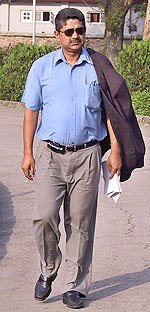
Professionals urge govt to respect rights

Kathmandu, Feb 7-Heads of professional organisations on monday urged the government to free detained politicians, rights activists, lawyers and journalists.

“If people’s freedom cannot be protected despite the Constitution, there is no need to perpetuate the sham democracy in the country,” said president of the Nepal Bar Association (NBA), Shambhu Thapa.

Thapa said that the protest of professionals would continue until the government releases the detainees. “Why does the government want to keep in detention those who were protesting peacefully?” he asked.

Thapa added that the government itself was depicting the nation’s set-up as the worst democracy in the world. He was speaking at a protest programme organised by the Professionals’ Alliance for Peace and Democracy (PAPAD) at the NBA office premises.

NBA general secretary Madhav Banskota said that professionals have always wanted peace and democracy and that they would not tolerate the suppression of freedom.

President of the Federation of Nepalese Journalists (FNJ), Bishnu Nisthuri said that professionals took to the streets demanding restoration of rights. “If the government won’t respect the rights of the people we will launch more protests,” he added. He urged businessmen to come out clearly against autocracy.

Nepal Medical Association president Dr Sudha Sharma, Teachers’ Unions’ representatives Indra Nepal and Bishnu Prasad Adhikary and Engineers’ Association representative Sagligram Adhikary also warned the government not to detain professionals illegally.

Monday, February 06, 2006


Lawyers criticises EC decision

Kathmandu Feb 6-Lawyers have said that the decision of the Election Commission (EC) to allow voters to cast their votes without voter's identity card is inconsistent to the constitution and laws Nepalnews write in special reports .

Constitutional lawyer Bhimarjun Acharya said that the notice of the commission is not in accordance with the law and constitution. He said that the commission has no right to issue any directives that are inconsistent with constitution and rules and regulations related to elections.
Acharya claimed that the commission has brought out the news rules with the assumption that it would increase the number of people casting votes.This would be illegal election, he said, if it is so.

Secretary of Nepal Bar Association Madhav Baskota said that the directive of the EC violates the rule of law. He said that the directive cannot be accepted as a legal instrument because it is against the spirit of the constitution of 1990.

He hinted, however, that they would not move to the Supreme Court against the directive.
Meanwhile, the EC defended its move. Spokesperson of the EC Tejmuni Bajracharya said that clause 34 of the amended regulation relating to local election 1991 empowers the EC to bring such directives.

He said that the EC made this arrangement so that all people above 18 years, who have not received their voter's identity cards, can cast their votes in the municipal polls slated for Wednesday. If such am arrangement were not made, a large number of Nepalis citizens would be barred from their right to vote, he added.

Baskota also agreed that without such arrangement, people may be barred from their right to vote. But, he said, to avoid this situation, the commission should have distributed voters identity card earlier. The EC cannot go against the constitution in the name of protecting the rights of voters, he said.

The EC has not issued voters identity card since 2001 though it has been updating the list of the voters across the country.

The EC on Sunday directed its polling officers to allow people to cast their votes even if they do not posses voter's identity card. The election regulation of 2052 allows only persons possessing voters identity card to cast vote in the elections.

Same as,The private school operators in the Kathmandu Valley on Monday warned of strong protests if the Election Commission (EC) did not withdraw its decision to vacate the schools for the municipal elections slated for February 8.

The school operators’ warning comes a day after the EC directed 33 private and 111 public schools in the valley to “compulsorily” vacate their buildings from Monday evening for polling booths.

Criticizing the EC’s directive, president of the Private and Boarding Schools Organization of Nepal (PABSON), Umesh Shrestha, at a programme in the capital today, warned of protests if the decision was not withdrawn immediately.

Himal Sharma to Remain in Judicial Custody till Final Verdict

Kathmandu Feb 6- The Patan Appellate Court ruled for judicial custody for Himal Sharma, former General Secretary of ANNISU-Revolutionary, on Monday until the Court gave its final verdict on the multiple cases filed against him. The government formally charged Sharma with some half-a-dozen cases, including the murder of Colonel Kiran Basnet, on Sunday but the cases were filed only today due to paucity of time yesterday.

A joint bench of justices Nanda Raj Adhikari and Ali Akbar Nikarani gave the order on the cases that were filed against 11 Maoist leaders, including Maoist Supremo Prachanda and Babu Ram Bhattarai.

The charge sheet against Sharma was produced at the Court on Sunday only after 50 days in detention under the Terrorist and Disruptive Activities Control and Punishment Ordinance-2005.

Related news

SC defers RPP hearing

Kathmandu, Feb 6 - The Supreme Court Sunday deferred initial hearing of the RPP case, citing lack of time. Justice Kedar Prasad Giri was to take up the case relating to the controversial decision of the Election Commission (EC) on January 24.

The EC had suspended the election symbol of RPP and awarded separate symbols to RPP led by Pashupati SJB Rana and dissident faction led by Home Minister Kamal Thapa. Rana moved the court last Thursday contesting EC decision.

SC asks clarification regarding detainees

Kathmandu, Feb 6 -The Supreme Court (SC) ordered the Ministry of Defense, the Royal Nepalese Army (RNA) headquarters, Rajdal Battalion, and the RNA’s Bhairavnath Barracks for the second time to produce before the apex court clarifications as to why the authorities were yet to respond to an SC order on January 1.

The authorities were yet to respond to the apex court on their false report regarding the detention of alleged Maoists Ranjit Darnal, Amrit Darnal, Rajendra Chaurel and Pushpa Raj Basnet, according to reports.

The authorities had submitted written explanation to the SC claiming the alleged Maoists were not in army detention. However, an inspection team of the National Human Rights Commission (NHRC) had found the alleged Maoists at the two army barracks.

Following the NHRC’s findings, a division bench of Justices Ram Prasad Shrestha and Top Bahadur Magar had sought clarification from the authorities as to why they had submitted such false claims before the SC, reports The Himalayan Times daily.

Responding to show cause notices on separate habeas corpus petitions, the Rajdal Battalion and Bhairavnath barracks had told the SC some five months ago that the alleged Maoists were not in army detention.

The NHRC had send a report to the Supreme Court saying that its team had found four of the Maoists mentioned in the habeas corpus petitions in army detention Ranjit Darnal, Amrit Darnal and Rajendra Chaurel at the Rajdal Battalion barrack and Pushpa Raj Basnet at the Bhairavnath barrack.

The NHRC report said the Maoist suspects were held without following proper legal procedures. “The authorities provided no legal facilities to the detainees. They were also not allowed to meet lawyers and relatives. The arrests were made by crossing constitutional bounds,” the report said.

Sunday, February 05, 2006

Chief Justice Poudyal releases Karki's book
Kathmandu, Feb 5- Chief Justice Dilip Kumar Poudyal released a book 'Public Finance and Economic Administration in Nepal' by Badri Bahadur Karki amidst a programme Saturday.Addressing the programme, Poudyal said that the book has covered the subjects like public finance administration, economical administration, revenue, foreign aid, monetary and financial polices.
The topics have relation with various acts and regulations, he added.Good books are not only the treasures of nation but also beneficial for the readers, he added.He further said that public finance and economic administration help maintain the fiscal discipline which results into the economic development in the nation. He also stressed on transparency in the public administration and said that it would expedite the development process.
Badri Bahadur Karki said the book could be beneficial for the students, teachers, researchers as well as the general readers as it has encompassed issues related to the public finance and administration in Nepal.
Gahendra Nath Adhikari, Auditor General, said that the public finance would yield better results if existing anomalies in the accounting system are removed. Professor Ganashyam Pudasaini said that the book has incorporated the details of economic and financial status, which would be helpful for the school and university level students and both the government and non-government organisations

Saturday, February 04, 2006


SC orders DNA test to confirm paternity

Kathmandu,Feb 4- The Supreme Court has directed conducting deoxyribonucleic acid (DNA) test to decide the paternity of twins born illegitimately to a woman from Lamjung district.

With the order passed on Wednesday, the apex court has set a trend to decide all paternity cases by DNA testing. Gaumaya Sarki had given birth to twins in 1996 though her husband had been working in India for three years and she had not met him all this while. She filed a paternity suit in Lamjung district court claiming that her cousin, Rajendra Sarki, who was just 13 years old then, was the father of the twins.

However, another person, Krishna Bahadur Gaire, claimed he was the real father of the twins as Gaumaya had intimate relations with him as well. He said he was ready to accept the twins and the mother. In 1998, the district court decided in favour of Gaire disregarding the mother’s claim as Rajendra was just 13 years of age.

Gaumaya moved Pokhara Appellate Court against the decision. But the appellate court upheld the district court verdict in 1999. Rajendra, who turned 18 in 2001, then moved the apex court, claiming to be the father of the twins.

The case had been pending since then and came up for hearing on Wednesday when a division bench of Justices Sharada Shrestha and Top Bahadur Magar issued the order that a DNA test be conducted to decide the paternity of the twins.

“This is the first time that the Supreme Court has ordered DNA test to find out paternity of the offsprings,” Rajendra’s advocate Jyoti Baniya said. “Now people have the right to ask for a court order for DNA testing,” he added. It may be mentioned that the National Forensic Science Laboratory in Lalitpur started conducting DNA tests in January. Earlier, the mother’s statement was considered while identifying the father of illegitimate children because “according to Hindu philosophy a mother cannot lie about childbirth”. However, in this case the district and appellate courts disregarded mother’s claim as she was claiming that a 13-year-old was the father of her kids.

Friday, February 03, 2006

UN OHCHR calls for release of detainees

Kathmandu, Feb 3 - United Nations Office of the High Commissioner for Human Rights in Nepal, (OHCHR-Nepal) on Friday called for the release of all detainees held under the Public Security Act (PSA) for expressing their political opinion in a peaceful manner.

In a letter sent to Home Minister Kamal Thapa on Friday, the representative of the UN High Commissioner for Human Rights in Nepal, Ian Martin said, "The great majority of these persons appear to have been arrested for exercising their right to freedom of peaceful assembly or expressing their political opinion. I urge that your Ministry undertake an urgent review of all PSA detention cases with a view to ensuring the immediate and unconditional release of those against whom there is no evidence of involvement in violence. "

OHCHR-Nepal is aware of more than 800 people who have been detained under the PSA around the country in the context of protest activities by the alliance of seven political parties and civil society organisations. It requested the Home Ministry to make available the complete list of those currently detained under the PSA and their places of detention.

OHCHR-Nepal also asked what instructions have been given to Chief District Officers regarding the use of their power to order detention under the PSA in the current context, and how such instructions conform to Nepal’s obligations to respect the internationally-guaranteed rights to freedom of expression, peaceful assembly and association, a statement issued by the OHCHR on Friday said.

OHCHR-Nepal has also written to the leadership of the CPN (Maoist) to call for the immediate release of the Chief District Officer of Palpa, Laxman Kumar Thapa, and of all other civilians taken captive in the attack on Tansen. OHCHR has also urged the rebels that captured members of the security forces be treated fully in accordance with international humanitarian law, the statement said.

It also welcomed the statement by the Spokesperson of the CPN (Maoist) which had stated that his party has no general policy to take physical action targeting any innocent person, political worker or election candidate.It also called on the findings of such investigations and action taken to be made public.

“As the date of the municipal elections approaches, OHCHR-Nepal calls once again on the authorities to respect the right of freedom of peaceful assembly and expression. OHCHR-Nepal also calls on those advocating boycott of the elections to do so peacefully and with respect for the rights of others, and urges that no coercion should be applied to force people to participate in bandhs or other protest actions,” the statement added.

The authorities are yet to respond to the latest call by the UN OHCHR


SC notice to govt over Military Act provisions

Kathmandu, Feb 3-Responding to a Public Interest Litigation (PIL) challenging several provisions in the Military Act 1959, the Supreme Court on thrusday issued show cause notices to the government authorities demanding reasons why such provisions, that the petitioner claimed contradict with the constitution, are still functional.

The PIL was filed yesterday in the Supreme Court seeking its order to annul over half a dozens of provisions in the Military Act.Following today’s hearing, a single bench of justice Ram Prasad Shrestha issued the order to the defendants the Office of the Prime Minister and the Cabinet, the Ministry of Defence, the Ministry of Law, Justice and Parliamentary Affairs and the Parliamentary Secretariat to produce their written explanation within 15 days.

The PIL claims that there are a number of provisions in the Military Act that contradict with the Constitution. The petition seeks to annul these provisions.

The writ petitioner listed over one-and-a-half-dozen such provisions in the Act that contradict with the Constitution.

Need to adopt mediation in Legal Aid Act stressed

Kathmandu, Feb 3- President of the Nepal Bar Association, Shambhu Thapa,on thrusday said the NBA has been asking the government to amend the Legal Aid Act 2054 BS to adopt reconciliation and mediation process while resolving legal disputes.

He also said there is an urgent need to amend the Appellate Court Regulation to adopt recently adopted principles in the justice system.According to him, District Court Regulation has adopted the principle two years ago and that there is a need to adopt the recent practices in the justice sector.

“Developed countries have already adopted the principles in justice sector and underdeveloped country like Nepal should have to learn from them,” Thapa added.

He was speaking at a programme on Court Referred Appellate Mediation Workshop for Bar organised by the Nepal Bar Association.In the programme, US Mediator, Robert C Randolph, NBA General Secretary Madhav Banskota, and Chief Of ARD rule of law Project Frederick Yeager, stressed the need to adopt the principles of reconciliation and mediation in justice sector to easily resolving disputes.

RPP moves to SC against the decision of Election Commission

Kathmandu Feb 3-The Rastriya Prajatantra Party (RPP) moved to the Supreme Court (SC) on Thursday challenging the Election Commission's January 24 decision to deny both factions of the RPP the election symbol, a plough.

The petition claims that the decision of the EC infringes the rights of the RPP led by Rana, as the party had been using the symbol for a long time.

"The EC's decision violates party's rights ensured by Articles 11(1), 12, 2(c), 113 and the section 18 of the Election Act 1990," the writ petition states.

Talking to Nepalnews on Friday, joint general secretary of the RPP Khem Raj Pundit said that they moved to the SC in the suspicion that it will give decision under some influence.

"Every proof is in our favour and we are the RPP, but the EC did not give us the symbol 'plough' rather decided to freeze it so we moved to the SC with the suspicion that the EC might give verdict under some influence," he added.

He further added that they moved to the SC to save their election symbol.

The EC decided to freeze the election symbol plough after both factions of RPP led by Rana and Home Minister Kamal Thapa claimed for the same saying they are the authentic party.

The dissident faction of RPP led by Home Minister Thapa deposed party president Rana from the post of party president by holding a special general convention after the party establishment side expelled 10 central committee members including Thapa.

The establishment side said the claim of Thapa faction for the election symbol is baseless saying the dissident faction did not have right to summon special general convention.

Thursday, February 02, 2006


Municipal poll has no meaning :former justice

Kathmandu Jan 2-In an interaction programme organized by the Forum for Protection of Human Rights (FOPHUR), former justice of Supreme Court Laxman Prasad Aryal said that observation of municipal poll has no meaning when state has been terrorising people to compel them to cast vote.

He further said the upcoming election would in no way be called 'genuine elections' - defined by the International Covenants of Civil and Political Rights – when it is conducted at the time sovereign rights of people have been snatched away. Aryal also made it a point to claim that the elections would not be free and fair because the EC has been working under pressure from the government.

Political analyst Prof Krishna Pokhrel said that general concept of election is to find solution to conflicts but, in Nepal’s case, the forthcoming elections are going to intensify the conflict.

Senior advocate Bishwa Kant Mainali said there would have been monitoring had the government created situation where major political parties could take part.

The National Human Rights Commission (NHRC), the NGO Federation Nepal and a number of other human rights groups have already declared not to observe the municipal elections but they would closely monitor the incidences of human rights violence during the polls.

Main while, elections are going to be held for 618 positions only in 36 municipalities across the country on February 8, officials said.

According to the Election Commission (EC), voting will be held in 34 municipalities for the post of mayor and in 25 municipalities for the post of deputy mayor. Similarly, voting will be conducted to elect 197 ward chairmen, 291 ward members and 71 female members would be elected through polls on the day.

The commission had announced that mayors in 24 municipalities and deputy mayors in 31 municipalities were elected unopposed. Likewise, 389 ward chairmen, 618 ward members and 214 female members were declared elected unopposed.

Nominations were not filed in two posts of two deputy mayors, 220 ward chairmen, 1,508 ward members and 521 female members. 58 mayors, deputy mayors in same number, 806 ward chairmen, 2,418 ward members and 806 female members were to be elected for 50 municipalities in the country.
Military Act challenged


Kathmandu, Feb 2-A Public Interest Litigation (PIL) was filed on wednesday in the Supreme Court seeking the apex court’s order to annul several provisions in the Military Act 1959 that the petitioner said contradict with the country’s constitution.

Advocate Bharat Mani Gautam filed the petition seeking the Supreme Court order to nullify the provisions, which contradict with the Constitution. The PMO, the Ministry of Defence, Ministry of Law, Justice and Parliamentary Affairs and Parliament Secretariat have been made defendants in the case.

The writ petitioner claimed that there are over one-and-a-half dozen of provisions in the Act that contradict with the Constitution regarding the military operation and army mobilisation. “The Constitution has made the provision of the Security Council to mobilise the army but the Act has provisions to mobilise the army with the command of the King,” the petitioner claimed.

“Despite the Constitutional provision (Article 118) to mobilise the army with the decision of the Security Council headed by Prime Minister, the Military Act has provision that say the army should be operated with the command of the King. The Act also has provisions under which the King can keep forces for his use,” the petitioner states.

The petitioner also sought certiorari and other necessary orders in this regard. The advocate has also listed various clauses of the Act which he said contradict with various Articles of the Constitution. “The provisions in the Military Act are against the concept of ‘King can do no wrong in parliamentary democracy’, thus the court should nullify these provisions,” he added.

CJ failed to protect judicial freedom: NBA

Kathmandu, Feb 2- President of the Nepal Bar Association (NBA), Shambhu Thapa, has accused the Chief Justice, Dilip Kumar Paudel, of failing to maintain the independence of the judiciary following the February 1 royal takeover.

Speaking at a programme organised here by the NBA to observe black day in protest of the February 1 royal takeover, Thapa said, “The Chief Justice is mainly to blame for failing to maintain the independence of the judiciary.”

“It would have become impossible for anyone to violate the Constitution if the Supreme Court had played a strong role to protect the Constitution.”

Thapa and NBA general secretary, Madhav Banskota, also raised questions about the recent appointment of judges at the Supreme Court.
The judicial council is making preparations to appoint judges in Appellate Courts and District Courts under pressure from the Minister of Law, Justice and Parliamentary Affairs, Niranjan Kumar Thapa, they said.

The appointment of Pawan Kumar Ojha as the judge of the Supreme Court is the evidence of royal intervention in the judiciary, Thapa, the NBA president, said.

“The 1990 Constitution does not provide unlimited authority to the King. Rather, it guarantees the rights of the sovereign Nepali citizens,” Thapa said.

“We do not want to curtail the rights of the King,” Thapa said, adding: “We only want to call on the King not to trample on the rights of the commoners.”

Thapa also criticised the government for arresting lawyers, rights activists and politicians “so as to prevent them from protesting against the February 1 royal takeover”.

Banskota also accused the government of interfering with the independence of the judiciary. “If the government appoints more royalists as judges, we would be compelled to launch protests.”

Stating that the February 1 royal takeover had become unpopular, senior advocates Bishwa Kanta Mainali and Krishna Prasad Bhandari urged the King to give up powers and not to curtail the rights of the people.

Time has come to hit the streets to protect the rights of the people, Supreme Court Bar unit chief Dhruba Nath Panta and Appellate Court Bar unit chief Ishwari Bhattarai said.

SC Notices to Govt, Administrators

Kathmandu, Feb 2-The Supreme Court issued show cause notices to the government and all the regional and zonal administrators on Wednesday demanding reasons on why the administrators have been staying in the posts even after the end of their tenure as per the ordinance under which they were appointed in the posts some 10 months ago.

A single bench of justice Kedar Prasad Giri issued the order following today's hearing on a writ petition filed by a group of people including advocate Hari Bahadur Mainali. The petitioners have claimed that the administrators' tenure ended four months ago as soon as the six-month-long tenure of the Ordinance promulgated to appoint them ended. The government had promulgated the Ordinance amending the Local Administration Act 2028 to appoint the regional and zonal administrators.

Tuesday, January 31, 2006


Politicians,officials under CIAA scanner

Kathmandu, January 31-The Commission for the Investigation of Abuse of Authority (CIAA) on tuesday said it is looking into the sources of income of some 31 politician and high-ranking officials.

“We have been investigating 31 politicians and high ranking officials,” said Kumar Chundal, an investigative officer at the CIAA, adding, the anti-graft body would also decide within a couple of months whether to file corruption cases against 15 individuals. Chundal was briefing journalists while making public the facts of the annual CIAA report for the current fiscal year. The report was made public by the King yesterday by activating Article 127 of the Constitution at the time when parliament is not functioning.

Another CIAA officer, Chet Nath Ghimire, revealed some clues about the corruption case against former prime minister Girija Prasad Koirala. He said the body was investigating Koirala’s relatives and former officials working with him. Ghimire, who is also Deputy Attorney General, claimed that the CIAA had filed a corruption case against Koirala’s former personal assistant Gokarna Paudel and probe into activities of another assistant of Koirala, Hari Sharma, was pending.
SC upholds action against former Lalitpur judge

Kathmandu, January 31-The Supreme Court today upheld the authority of the Judicial Council to take action against judges on charge of misconduct or on any other ground as per the Constitution. The chief Justice remains the head of the Judicial Council.

Approving a four-year-old recommendation of the Judicial Council, a division bench comprising Justices Balram KC and Tahir Ali Ansari upheld the action against the then Lalitpur District Court judge Gopal Prasad Guragain. Challenging the Judicial Council’s recommendation to the King, Guragain had filed a writ petition in the Supreme Court. The King has already approved the Council’s recommendation to sack Guragain.

A one-member panel constituted by the Judicial Council to investigate into bribery charges against Guragainrecommended had recommended his sacking. The Judicial Council has been exercising the power to take action against judges on grounds of incompetence or misbehaviouras per Article 91(3) of the Constitution.

The bench today said there were no procedural errors while sacking the former judge on charges of incompetence and there was no need to issue a writ to the Judicial Council.

The Judicial Council had recommended action against Guragain after he received Rs 195,000 as bribe from a government attorney, Lekhnath Paudel. Gurugain claims it is injustice to sack him as the government attorney had send the bribe to his home without his consent seeking his favour in a sub-judice criminal case.

While the Judicial Commission had sacked government attorney Lekhnath Poudel, the Judicial Council had began action against Guragain.


NBA President not to plead before Ojha

Kathmandu, January 31-The Supreme Court today postponed hearing on a case after the lawyer, the president of the Nepal Bar Association, Shambhu Thapa, refused to plead before the bench that included ad hoc judge Pawan Kumar Ojha.

After Thapa refused to plead, the court postponed the hearing. The bench comprised judges Ram Nagina Singh and Ojha. The bench said the case was postponed as per the request of the lawyer. Thapa was present in the court to plead on behalf of the Nepal Bank Limited in a case filed by the employees of the bank.
HM publicizes reports

Kathmandu Jan 31-His Majesty King Gyanendra, under article 127 of the constitution of the kingdom of Nepal -1990, has issued orders and made public the annual reports of the Commission for Investigation of Abuse of Authority (CIAA) and the Public Service Commission (PSC) of the Fiscal Year 2061/062 BS, and the report of the Office of the Auditor General- 2062 BS, presented to His Majesty the King, in accordance with the constitution of the kingdom of Nepal -1990.

This is stated in the notice published today by the Press Secretariat of His Majesty the King.
His Majesty has publicized these reports in absence of parliament.

As per the constitutional provision, such reports should be publicized by the parliament.

same as His Majesty the King has, in accordance with the Constitution of the Kingdom of Nepal-1990, promulgated the ‘Ordinance to Amend Some Nepal Acts Related to Education and Sports, 2006’.

This is stated by the Office of the Prime Minister and Council of Ministers .